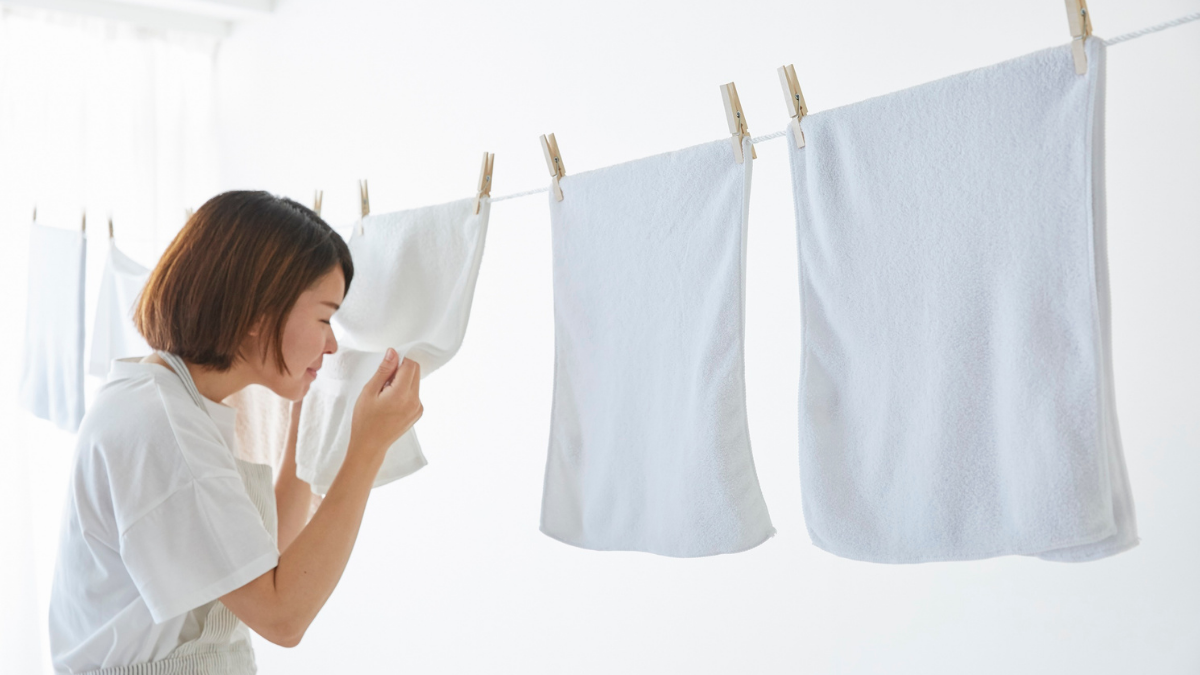
A freshly washed towel shouldn’t develop a sour or musty smell after only a short time. When it does, the problem is often moisture combined with the residue towels naturally collect during use.
Bath towels absorb water while also picking up body oils, dead skin cells, cosmetics, hair products, and other residue. If the fabric stays damp for too long, conditions become more favorable for microorganisms that contribute to unpleasant odors.
Fortunately, a few changes to your drying and laundry routine can make a noticeable difference.
Let Towels Dry Completely Between Uses
Slow drying is one of the biggest contributors to towel odors.
Instead of leaving your towel crumpled on the floor or folded heavily over a small hook, hang it immediately and spread it out as much as possible. A towel bar can expose more fabric to circulating air, helping moisture evaporate faster.
Bathroom ventilation matters too. Using an exhaust fan, appropriate window ventilation, or another source of airflow can help reduce lingering humidity after a shower.
If several people share a bathroom, give each towel enough space to dry rather than stacking damp towels together.
Watch for Body and Product Buildup
Even after showering, your towel collects natural skin oils, dead skin cells, sweat residue, lotions, cosmetics, and hair products.
Over repeated uses, these substances can build up in the fabric and contribute to odors. Heavy use of body oils, conditioners, lotions, or styling products may mean your towels need more frequent laundering.
If a towel starts smelling unpleasant, don’t continue using it simply because your scheduled laundry day hasn’t arrived.
Don’t Use Too Much Detergent
More detergent doesn’t necessarily produce cleaner towels.
When your washer can’t rinse away excessive detergent effectively, residue can remain in the fibers. Over time, this may affect the towel’s feel and combine with oils and other buildup.
Follow detergent and washing-machine guidance for your load size and avoid packing too many bulky towels into one cycle. Towels need enough space to move for proper washing and rinsing.
Move Wet Towels Promptly
Leaving freshly washed towels sitting inside the washing machine can quickly undo your cleaning efforts.
Move them to the dryer or drying area reasonably soon after the cycle ends. If you’ve forgotten a load long enough for it to develop a musty odor, rewashing may be more effective than simply drying it.
Before folding towels, check thick hems and folds to make sure they’re completely dry.
Consider Your Laundry Products
Fabric softeners and dryer sheets can deposit conditioning ingredients on textiles. Depending on the towel and product, repeated buildup may influence absorbency or how the fabric feels.
If your towels have become noticeably less absorbent, review the products you’re using before assuming the towels need replacing.
Be cautious with homemade laundry mixtures as well. Combining household cleaning chemicals can damage textiles or, in some cases, create hazardous reactions. Start with the care label and proper washing, rinsing, and drying practices.
Wash Towels When They Need It
There isn’t one washing schedule that’s ideal for every household.
A towel used by one person and allowed to dry completely may stay fresh for several uses. Towels that remain damp, smell unpleasant, become visibly dirty, are shared, or accumulate substantial product residue may need washing sooner.
Gym towels, washcloths, hand towels, and beach towels can require different routines because they’re exposed to different types and amounts of moisture and contamination.
Store Clean Towels in a Dry Place
Proper washing won’t help for long if clean towels go into a damp linen closet.
Only store towels once they’re completely dry, and keep them somewhere clean and protected from persistent humidity or leaks. Avoid packing shelves so tightly that moisture problems become difficult to notice.
Rotating several bath towels can also make it easier to give each one enough time to be washed and thoroughly dried.
Keep Freshness Focused on Cleanliness
A heavily scented towel isn’t necessarily a clean towel. Fragrances can cover odors without addressing trapped moisture, body oils, detergent residue, or other underlying causes.
Focus instead on the basics: hang towels immediately after use, improve airflow, wash them when needed, avoid excess detergent, dry them thoroughly, and store them somewhere dry.
If a towel continues to smell after you’ve corrected your washing, drying, and storage routine—or it has become thin, torn, uncomfortable, or permanently less absorbent—it may simply be reaching the end of its useful life.
Leave a Reply