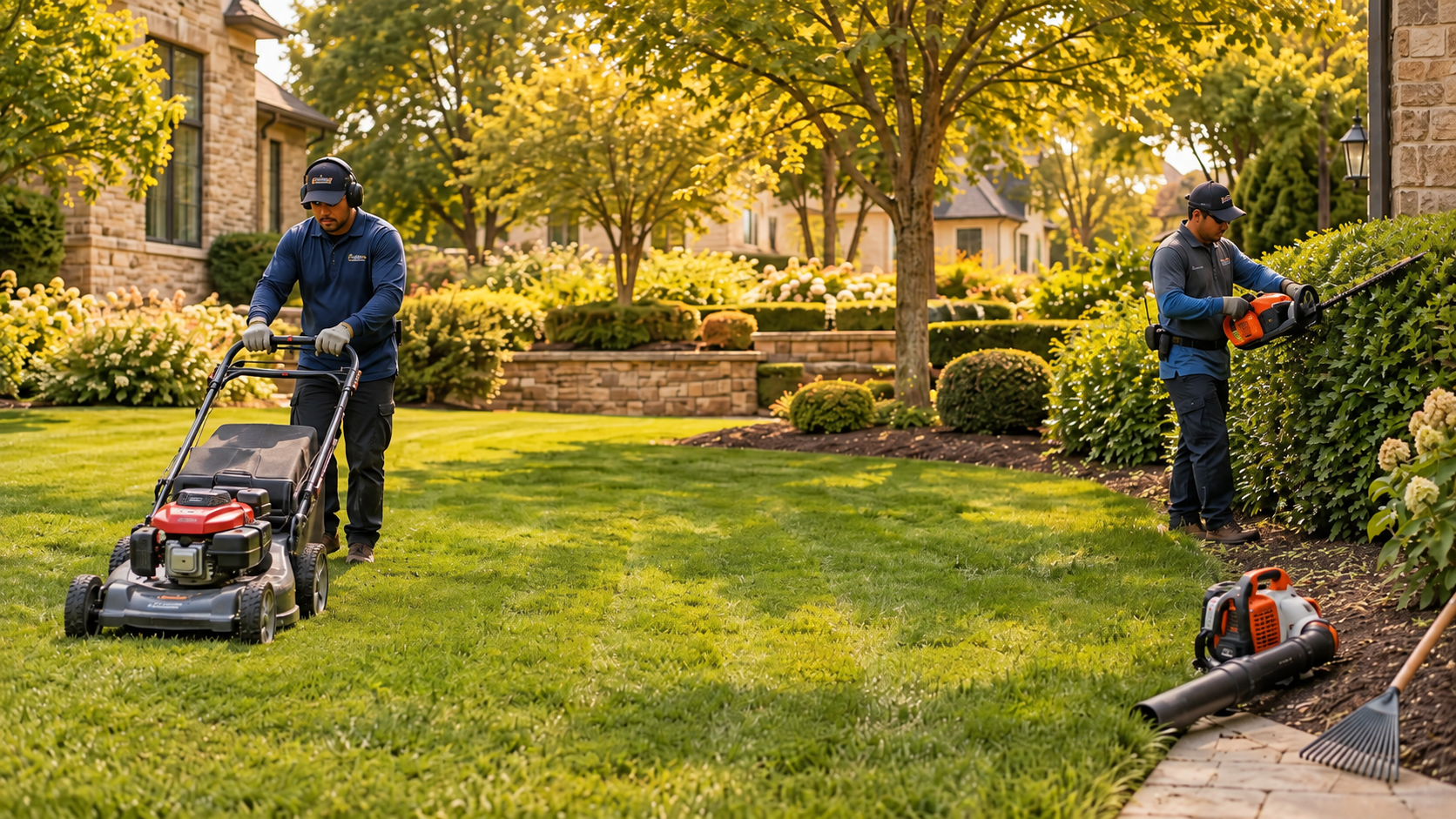
A beautiful yard rarely stays that way without regular attention. Grass grows, weeds spread, shrubs lose their shape, and seasonal weather can quickly change the appearance of your property.
With a consistent maintenance routine, you can care for your lawn, plants, trees, flower beds, and other outdoor features throughout the year. You may also catch minor problems early before they become more difficult or expensive to manage.
From mowing and pruning to seasonal cleanup, each task plays a role in keeping your landscape organized and attractive.
What Is Landscape Maintenance?
Landscape maintenance refers to the ongoing care required to keep lawns, gardens, trees, shrubs, and outdoor spaces in good condition.
It may include routine tasks such as mowing, trimming, fertilizing, weeding, watering, mulching, and removing debris.
Your maintenance needs can vary depending on the size of your property, local climate, plant varieties, soil conditions, and how your outdoor space is designed.
A simple yard may only need basic lawn care and occasional trimming. A property with flower beds, ornamental shrubs, trees, pathways, and irrigation systems may require more frequent attention.
Why Landscape Maintenance Matters for Your Property
Regular outdoor care does more than improve appearances. It may also help protect the health and condition of different areas around your property.
Neglected grass can become thin or overgrown. Shrubs may block walkways or windows. Weeds can compete with desirable plants for water and nutrients. Fallen branches and leaves may also create clutter.
Consistent landscape maintenance helps you manage these concerns before they become more noticeable.
It may also help you:
- Keep grass at a manageable height
- Reduce excessive weed growth
- Maintain cleaner flower beds
- Control overgrown shrubs
- Remove fallen leaves and branches
- Support healthier plants
- Keep pathways and outdoor areas accessible
- Improve your property’s overall appearance
What Does Landscape Maintenance Usually Include?
The exact services depend on your property and maintenance plan, but several tasks are common.
Lawn Mowing
Regular mowing helps keep your grass neat and manageable. Cutting grass at an appropriate height may also encourage healthier growth.
Mowing frequency often changes with the season. During periods of rapid growth, your lawn may need more frequent cutting.
Lawn Edging
Edging creates clean boundaries between your lawn and nearby areas such as sidewalks, driveways, patios, and garden beds.
This small detail can give your outdoor space a more organized and finished appearance.
Weed Control
Weeds can quickly spread through lawns and planting beds if they are not managed.
Routine yard maintenance may include pulling weeds by hand, applying mulch, or using other appropriate weed-control methods.
Regular monitoring helps you address unwanted growth while it is still manageable.
How Pruning and Trimming Support Plant Health
Shrubs, hedges, and small trees may need occasional trimming to maintain their shape and control excessive growth.
Pruning may also help remove:
- Dead branches
- Damaged stems
- Diseased plant material
- Overgrown sections
- Branches interfering with walkways
Different plants have different pruning requirements. Some should be trimmed during specific seasons, while others may tolerate light maintenance throughout the growing period.
Proper timing can help reduce unnecessary stress on plants.
Why Mulching Is Part of Landscape Maintenance
Mulch is commonly placed around trees, shrubs, and garden beds.
It may help:
- Reduce weed growth
- Retain soil moisture
- Regulate soil temperature
- Improve the appearance of planting beds
- Reduce soil erosion
Organic mulch gradually breaks down and may contribute material to the soil.
However, applying too much mulch around tree trunks or plant stems may cause problems. Keeping mulch slightly away from trunks and stems can help improve airflow.
Lawn Fertilization and Soil Care
Healthy grass depends heavily on the condition of the soil underneath it.
Over time, lawns may require additional nutrients to maintain steady growth. Fertilization may provide nitrogen, phosphorus, potassium, or other nutrients depending on soil conditions.
Before applying fertilizer, you may want to consider a soil test. Testing can help you understand nutrient levels and soil pH instead of adding products unnecessarily.
Professional lawn care services may include soil testing, fertilization planning, and treatments based on local growing conditions.
Watering and Irrigation Maintenance
Plants require enough water to stay healthy, but excessive watering can create problems too.
Too much moisture may encourage fungal growth or weaken certain plants. Too little water can cause lawns and landscaping plants to dry out.
Your watering schedule may depend on:
- Weather conditions
- Grass species
- Plant type
- Soil drainage
- Sun exposure
- Seasonal temperatures
If your property uses an irrigation system, regular inspection may help identify broken sprinkler heads, leaks, clogged emitters, or poorly adjusted watering zones.
Seasonal Landscape Maintenance Tasks
Your outdoor maintenance needs can change throughout the year.
Spring Maintenance
Spring often involves cleaning up after colder weather and preparing plants for active growth.
Tasks may include:
- Removing fallen branches
- Clearing planting beds
- Applying fresh mulch
- Trimming damaged growth
- Inspecting irrigation systems
- Fertilizing lawns when appropriate
Summer Maintenance
During warmer months, grass and plants may grow quickly.
Summer maintenance may focus on:
- Lawn mowing
- Weed control
- Watering
- Shrub trimming
- Pest monitoring
- Removing spent flowers
Fall Maintenance
Falling leaves and cooler temperatures create different maintenance needs.
Common tasks include:
- Leaf removal
- Final lawn mowing
- Cleaning garden beds
- Pruning selected plants
- Applying seasonal mulch
- Preparing irrigation systems for colder weather where necessary
Winter Maintenance
Landscape work may slow during winter, especially in colder climates.
You can still inspect trees, remove storm debris, clean outdoor spaces, and plan improvements for the next growing season.
How Often Should Landscape Maintenance Be Done?
There is no single schedule that works for every property.
Some tasks may need weekly attention, while others may only be necessary several times a year.
For example:
- Lawn mowing may be needed weekly or every two weeks during active growth.
- Weed removal may be needed throughout the growing season.
- Mulching may only be required once or twice per year.
- Pruning depends on the plant type.
- Seasonal cleanup is usually performed during spring and fall.
Creating a maintenance schedule can make it easier to keep track of recurring tasks.
DIY Landscape Maintenance Versus Professional Services
You can handle many maintenance tasks yourself, especially on smaller properties.
DIY care may work well if you have the time, tools, and knowledge required for mowing, trimming, watering, and basic garden maintenance.
Professionals may also provide equipment and experience for tasks such as:
- Tree and shrub pruning
- Fertilization
- Irrigation maintenance
- Lawn treatments
- Large-scale cleanup
- Seasonal preparation
Your choice may depend on your budget, schedule, property size, and the complexity of your landscape.
How Much Can Landscape Maintenance Cost?
Landscape maintenance costs can vary widely depending on your location, property size, services required, and frequency of visits.
Basic lawn mowing may cost less than a complete maintenance package that includes trimming, fertilization, weed control, mulching, and seasonal cleanup.
Some companies charge per visit, while others offer weekly, monthly, or seasonal service plans.
Before hiring a provider, consider asking for an itemized estimate so you understand exactly what is included.
How to Choose a Landscape Maintenance Provider
Comparing several providers may help you find services that match your property needs.
Before choosing a company, consider asking:
- Which services are included?
- How often will the property be serviced?
- Are seasonal cleanups included?
- Is fertilization available?
- Does the company maintain irrigation systems?
- How are additional services priced?
- Does the company carry appropriate insurance?
You may also want to review customer feedback and request written estimates.
Clear service details can make it easier to compare options.
Simple Ways to Reduce Landscape Maintenance
Some landscape designs naturally require more care than others.
If you want to reduce ongoing work, you might consider:
- Choosing plants suited to your local climate
- Using mulch around planting beds
- Installing efficient irrigation
- Reducing unnecessary lawn areas
- Selecting slow-growing shrubs
- Creating clearly defined garden borders
Thoughtful landscape design may reduce the amount of mowing, watering, trimming, and weeding required over time.
Frequently Asked Questions About Landscape Maintenance
What is included in basic landscape maintenance?
Basic maintenance usually includes lawn mowing, edging, trimming, weed control, debris removal, and general garden cleanup. Additional services may include fertilization, mulching, irrigation maintenance, and seasonal care.
How often should landscaping be maintained?
Many properties benefit from weekly or biweekly maintenance during active growing seasons. Other tasks such as pruning, mulching, and seasonal cleanup may only be required a few times per year.
Is landscape maintenance the same as lawn care?
Lawn care mainly focuses on grass, while landscape maintenance covers a wider range of outdoor areas, including shrubs, trees, garden beds, irrigation systems, and general property cleanup.
Can regular maintenance help plants stay healthier?
Consistent trimming, watering, weed management, and soil care may help support healthier plant growth. Regular inspections may also help you identify pests, disease, or other concerns earlier.
Can you maintain your landscape yourself?
Yes. Many homeowners handle basic mowing, watering, weeding, and trimming themselves. Larger or more complex landscapes may benefit from professional assistance.
Support a Neat and Healthy Yard With Consistent Maintenance
Instead of waiting until grass becomes overgrown or planting beds become difficult to manage, regular attention allows you to handle smaller tasks as they appear.
Your ideal maintenance schedule depends on your plants, climate, property size, and available time.
By combining routine lawn care, trimming, weed control, watering, mulching, and seasonal cleanup, you can create an outdoor space that remains easier to maintain and more enjoyable to use.
Leave a Reply