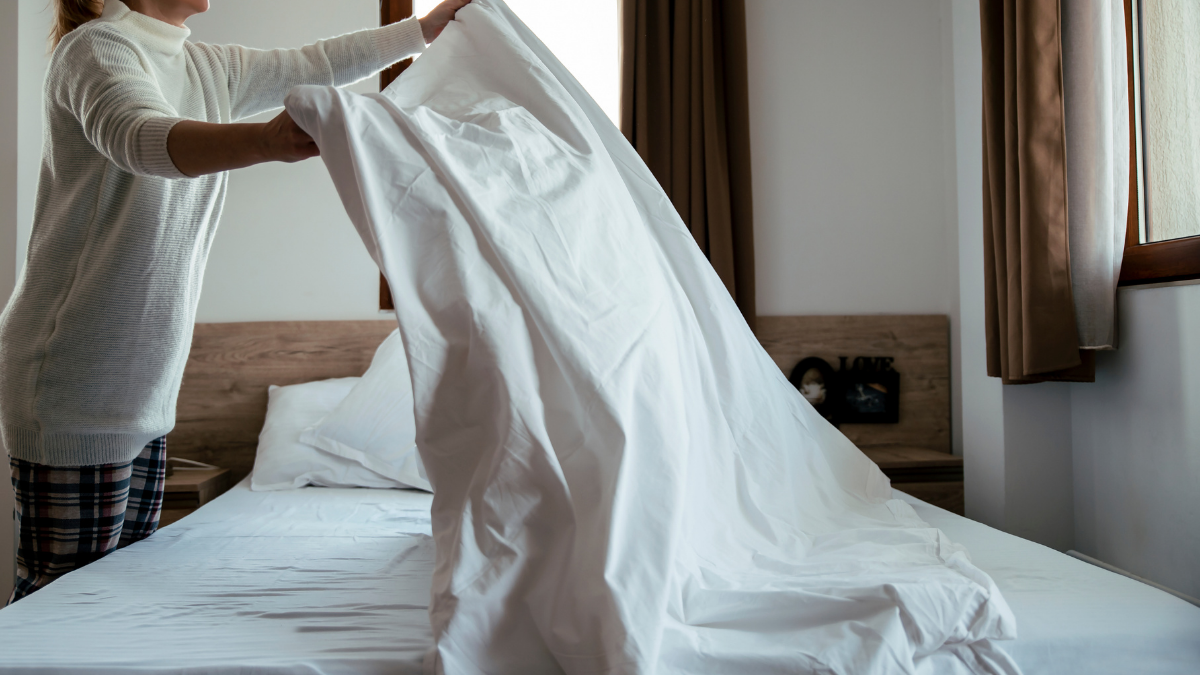
Clean, comfortable sheets don’t depend solely on laundry day. Small everyday habits can help reduce the sweat, body oils, dirt, pet hair, and other debris that accumulate on your bedding.
These habits shouldn’t replace regular washing. For most households, weekly laundering is a practical starting point, although pets, perspiration, climate, allergies, illness, and spills may require more frequent washing.
Let Your Bed Air Out
Your bedding can retain moisture and body heat after a night’s sleep. Instead of immediately covering the mattress with heavy blankets, pull back the comforter or duvet for a while.
Allowing air to circulate can help moisture evaporate before you make the bed. Good bedroom ventilation can also help, whether that comes from appropriate heating or cooling, a fan, or an open window when weather and outdoor air quality permit.
Keep Outside Dirt Away From Your Sheets
What you bring into bed has a major influence on how quickly your sheets become dirty.
Changing out of outdoor clothes before getting into bed can reduce the transfer of dirt, sweat, pollen, and other debris. Keeping your feet clean and washing sleepwear regularly can help as well.
Avoid putting shoes, dirty laundry, backpacks, shopping bags, or luggage directly on clean bedding. These items regularly contact floors and outdoor surfaces.
Manage Pets That Share Your Bed
If your pet sleeps with you, expect your sheets to need additional attention. Pets can bring hair, dander, pollen, dirt, and outdoor debris onto the bed.
Regular grooming and cleaning dirty paws after outdoor activity can reduce some of this buildup. A washable throw placed over your pet’s favorite sleeping area is another practical option because it’s easier to wash frequently than an entire comforter.
Change Pillowcases Between Full Washes
Your pillowcase receives constant contact with your face, scalp, hair, sweat, skincare products, and natural oils.
If your sheets still feel clean but your pillowcases don’t, change just the pillowcases. Keeping several spare pairs makes this easy without requiring you to wash the entire bedding set every few days.
Removing makeup before sleeping and allowing heavy lotions or hair products to absorb or dry can also reduce residue.
Keep Food and Moisture Out of Bed
Eating in bed introduces crumbs, oils, odors, and the possibility of spills. Keeping snacks and meals elsewhere is one of the easiest ways to keep sheets cleaner.
Wet towels, damp swimsuits, and sweaty exercise clothes should also stay off the bed. Added moisture can make bedding feel stale and create unnecessary dampness.
If a substantial spill occurs, don’t simply let it dry and wait for your normal laundry day. Remove and clean the affected bedding promptly.
Keep the Bedroom Clean Too
Fresh bedding won’t stay that way for long in a dusty bedroom.
Regularly clean the floor, including underneath and around your bed. Dust nightstands, headboards, shelves, windowsills, and ceiling fans so particles don’t continually settle onto your bedding.
A washable mattress protector and pillow protectors can provide additional barriers against sweat, oils, spills, and debris. These protective layers also need periodic washing.
Don’t Cover Odors With Fragrance
A scented spray may temporarily change how bedding smells, but it doesn’t remove sweat, body oils, dirt, allergens, or other buildup.
Fabric sprays can also leave residue or cause irritation for some people. If your sheets need substantial fragrance to smell acceptable, washing them is usually the better solution.
Freshness should come primarily from clean, dry bedding rather than added fragrance.
Rotate and Store Sheets Properly
Keeping a spare sheet set can make regular laundering easier. You can immediately remake your bed while another set is being washed and dried, while rotation also spreads everyday wear between sets.
Before storing clean sheets, make absolutely sure they’re dry. Damp linens can develop musty odors in storage, particularly in poorly ventilated closets.
Know When Freshening Isn’t Enough
Between-wash habits can extend that fresh-sheet feeling, but they have limits.
Visible dirt, significant perspiration, spills, persistent odors, or contamination are signals that it’s time for actual laundering. Likewise, odor-resistant or specially treated fabrics still accumulate sweat, oils, skin cells, and debris and shouldn’t be treated as replacements for routine washing.
Make Freshness Part of Your Daily Routine
Keeping sheets fresh doesn’t require an elaborate routine. Air out your bed, keep dirty clothes and outside items away from it, manage pet debris, change pillowcases when needed, and maintain a clean, reasonably dry bedroom.
Combined with consistent laundering, these simple habits can help your bedding stay more comfortable between washes—without relying on fragrances or temporary fixes.
Leave a Reply