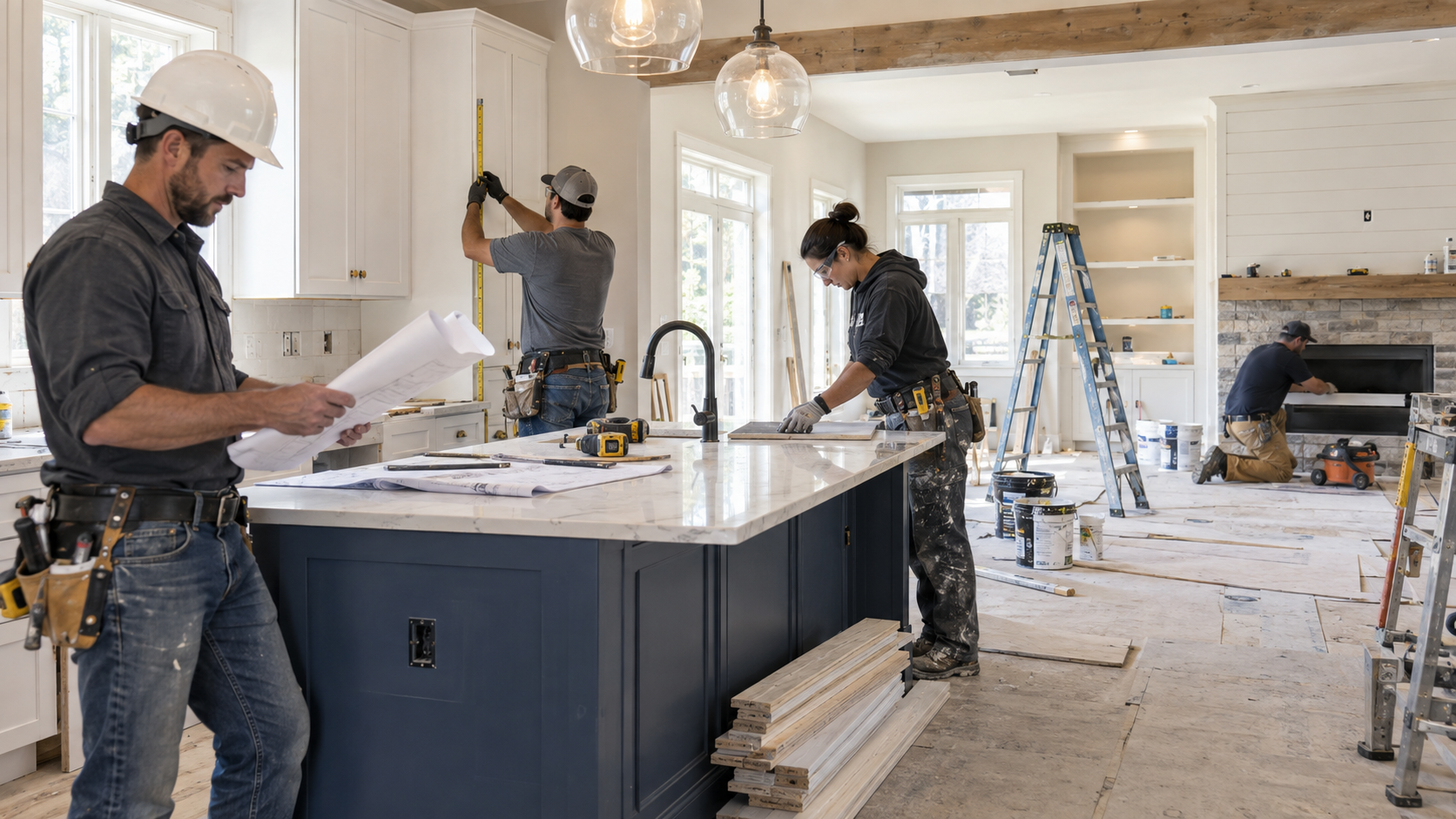
The contractor you hire may influence the quality of the finished space, how smoothly the project moves forward, and how closely the work stays within your budget and timeline.
Home remodeling can include anything from updating a kitchen or bathroom to renovating several rooms or changing the layout of an entire house.
Because every project has different requirements, you should carefully compare contractors, understand their services, and review the details of your remodeling agreement before construction begins.
What Do Home Remodel Contractors Do?
Home Remodel Contractors coordinate many of the tasks involved in improving or renovating residential properties.
Depending on the size of your project, they may manage demolition, construction, electrical work, plumbing, flooring, cabinetry, painting, and other improvements.
A contractor may also coordinate subcontractors who specialize in certain parts of the renovation. This can help keep different stages of the project organized while giving you one primary professional to communicate with.
Common remodeling services may include:
- Kitchen renovations
- Bathroom remodeling
- Basement finishing
- Flooring replacement
- Interior painting
- Room additions
- Wall removal or layout changes
- Cabinet and countertop installation
- Lighting upgrades
- Plumbing improvements
- Exterior remodeling
- Whole-home renovations
The exact services available depend on the contractor and the type of property being remodeled.
Why Hiring Experienced Home Remodel Contractors Matters
A remodeling project often involves more than replacing finishes or choosing new fixtures. Contractors may need to evaluate structural conditions, coordinate multiple trades, order materials, and follow local construction requirements.
Experienced home remodel contractors can help organize these moving parts and identify potential complications before they become larger problems.
For example, opening a wall during a kitchen renovation could reveal old wiring, plumbing issues, or structural concerns. A knowledgeable contractor can explain the available options and help determine what work may be necessary.
Professional coordination may also help reduce delays caused by poor scheduling between electricians, plumbers, carpenters, painters, and other specialists.
Determine Your Remodeling Goals Before Hiring a Contractor
Before contacting contractors, create a clear idea of what you want to change.
Start by identifying the main reason for the renovation. You might want more storage, an updated appearance, improved functionality, additional living space, or better use of an existing room.
Create a basic project list that separates your priorities into categories such as:
Essential improvements
- Repairing damaged materials
- Updating outdated plumbing
- Replacing unsafe electrical systems
- Improving structural components
Functional improvements
- Adding storage
- Changing room layouts
- Installing additional lighting
- Increasing counter space
Design improvements
- New flooring
- Updated paint
- Modern cabinets
- Decorative lighting
- New fixtures
Having clear priorities can make conversations with contractors more productive.
Create a Realistic Home Remodeling Budget
Your remodeling budget should include more than the contractor’s initial estimate.
Projects may involve costs for labor, construction materials, fixtures, appliances, permits, design services, waste removal, and unexpected repairs.
Before construction begins, decide how much you are comfortable spending and consider keeping part of the budget available for unforeseen expenses.
Older homes may require additional work after walls, floors, or ceilings are opened. Water damage, outdated wiring, plumbing leaks, or structural deterioration can sometimes increase the final project cost.
A detailed contractor estimate can help you understand where your money is being spent.
Compare Several Home Remodel Contractors
Avoid choosing a contractor based only on the lowest estimate. A significantly cheaper quote may exclude certain materials, labor, permits, or finishing work that other contractors have included.
When comparing estimates, look for details such as:
- Labor costs
- Material allowances
- Project scope
- Payment schedule
- Expected start date
- Estimated completion date
- Permit responsibilities
- Cleanup and debris removal
- Warranty information
- Change-order procedures
The more detailed the estimate is, the easier it becomes to compare contractors fairly.
Check Experience With Similar Remodeling Projects
Different contractors may specialize in different types of renovation.
A contractor who frequently remodels kitchens may have strong relationships with cabinet installers, countertop suppliers, plumbers, and electricians.
Someone specializing in additions may have more experience with structural work and larger construction projects.
Ask potential contractors about projects similar to yours.
You can also request photographs or examples of completed work. These examples may help you evaluate craftsmanship, design quality, and the contractor’s overall experience.
Verify Licensing, Insurance, and Credentials
Requirements for contractors vary by location, so you should check the rules in your state, county, or municipality.
Where applicable, verify that a contractor holds the required license and insurance.
Insurance may include:
- General liability insurance
- Workers’ compensation coverage
- Commercial vehicle coverage
These protections can be important if property damage or an injury occurs during construction.
You may also want to verify professional memberships, certifications, or specialized training when they are relevant to your project.
Read Reviews and Ask for References
Online reviews may provide useful information about a contractor’s communication, reliability, workmanship, and ability to handle problems.
However, you should not rely on a single review.
Look for patterns across multiple customer experiences. Consistent comments about communication, scheduling, cleanliness, or workmanship may provide a clearer picture of what working with the contractor could be like.
You can also ask for references from previous clients.
Consider asking those homeowners:
- Was the project completed close to the expected timeline?
- Did the contractor communicate clearly?
- Were unexpected costs explained?
- Was the work area kept reasonably organized?
- Were problems resolved professionally?
- Would they hire the contractor again?
These questions can provide useful insight before you sign a contract.
Ask About the Remodeling Timeline
Home renovations can take anywhere from a few days to several months depending on project size and complexity.
Ask contractors to explain the expected schedule before work begins.
A basic remodeling timeline may include:
- Initial planning
- Design and measurements
- Permit approval
- Material ordering
- Demolition
- Structural or mechanical work
- Installation
- Painting and finishing
- Final inspections
- Cleanup and walkthrough
Material delays, inspection schedules, weather, or unexpected repairs may affect completion dates.
A realistic contractor should explain these possibilities instead of promising an unrealistic schedule.
Understand How Change Orders Work
Changes are common during remodeling.
You may decide to upgrade countertops, move an electrical outlet, choose different flooring, or add extra work after construction begins.
Contractors usually document these adjustments through change orders.
A change order should explain:
- What work is changing
- Additional labor required
- Material costs
- Changes to the project price
- Possible effects on the completion date
Request written documentation before approving significant changes. This can reduce confusion later.
Review Your Remodeling Contract Carefully
The remodeling contract should clearly describe the agreement between you and the contractor.
Important details may include:
- Contractor contact information
- Project address
- Detailed scope of work
- Materials and product specifications
- Start and completion expectations
- Payment schedule
- Permit responsibilities
- Insurance information
- Warranty terms
- Change-order policies
- Cleanup responsibilities
- Dispute procedures
Avoid relying only on verbal agreements for major project details.
Written documentation helps both you and the contractor understand what is expected.
Plan for Life During the Renovation
Remodeling can temporarily disrupt your normal routine.
Kitchen renovations may limit your ability to cook, while bathroom projects could reduce access to essential facilities. Larger renovations may create noise, dust, and restricted areas throughout the house.
Before construction starts, ask the contractor about:
- Daily working hours
- Which areas will be inaccessible
- Dust-control methods
- Material storage
- Waste removal
- Temporary utilities
- Safety precautions
- Access for children or pets
For major renovations, you may need to consider temporary accommodations depending on the amount of construction involved.
Communicate Regularly With Your Contractor
Good communication can make a significant difference during a renovation.
Determine who your main contact will be and how often you will receive project updates.
Regular discussions can cover:
- Work completed
- Upcoming construction stages
- Material deliveries
- Inspection schedules
- Budget changes
- Unexpected problems
- Decisions you need to make
Addressing questions early may help prevent misunderstandings from becoming larger issues.
Look at the Quality of Materials
Material selection can affect appearance, durability, maintenance, and project cost.
Ask contractors what materials are included in their estimates.
For example, flooring can vary significantly in price depending on whether you choose laminate, vinyl, tile, engineered wood, or hardwood. Cabinets, countertops, fixtures, and appliances also come in a wide range of price levels.
You do not necessarily need the most expensive materials. Instead, consider durability, maintenance requirements, design, and how each product will be used.
High-traffic areas may benefit from materials designed to withstand frequent use.
Consider Energy-Efficient Improvements
A renovation may also be an opportunity to improve energy efficiency.
Depending on your home and project, improvements could include:
- LED lighting
- Improved insulation
- Energy-efficient windows
- Updated exterior doors
- Efficient heating and cooling equipment
- Water-saving plumbing fixtures
- Energy-efficient appliances
Some upgrades may reduce energy consumption while improving comfort.
Ask your contractor which energy-efficient improvements make sense for your renovation plans and budget.
Inspect the Finished Project
Before making the final payment, complete a walkthrough with your contractor.
Look closely at the completed work and identify anything that may need adjustment.
You might check:
- Cabinet doors and drawers
- Paint finishes
- Flooring
- Fixtures
- Electrical outlets
- Lighting
- Plumbing
- Doors and windows
- Trim and molding
- Countertops
Contractors may create a final punch list describing small items that need correction or completion.
Make sure you understand the warranty process and keep copies of contracts, receipts, warranties, permits, and other project documents.
Preparing for Your Next Home Remodeling Project
Finding dependable Home Remodel Contractors requires more than comparing prices.
You should consider experience, communication, licensing requirements, insurance, previous projects, contract details, and the contractor’s approach to managing construction.
Taking time to define your goals and compare several professionals can help you make a more informed decision.
A well-planned renovation combines realistic budgeting, clear expectations, quality materials, and consistent communication.
When you choose a contractor who understands your priorities and provides detailed information throughout the project, you may have a smoother path toward creating a home that better matches your needs and lifestyle.
Leave a Reply