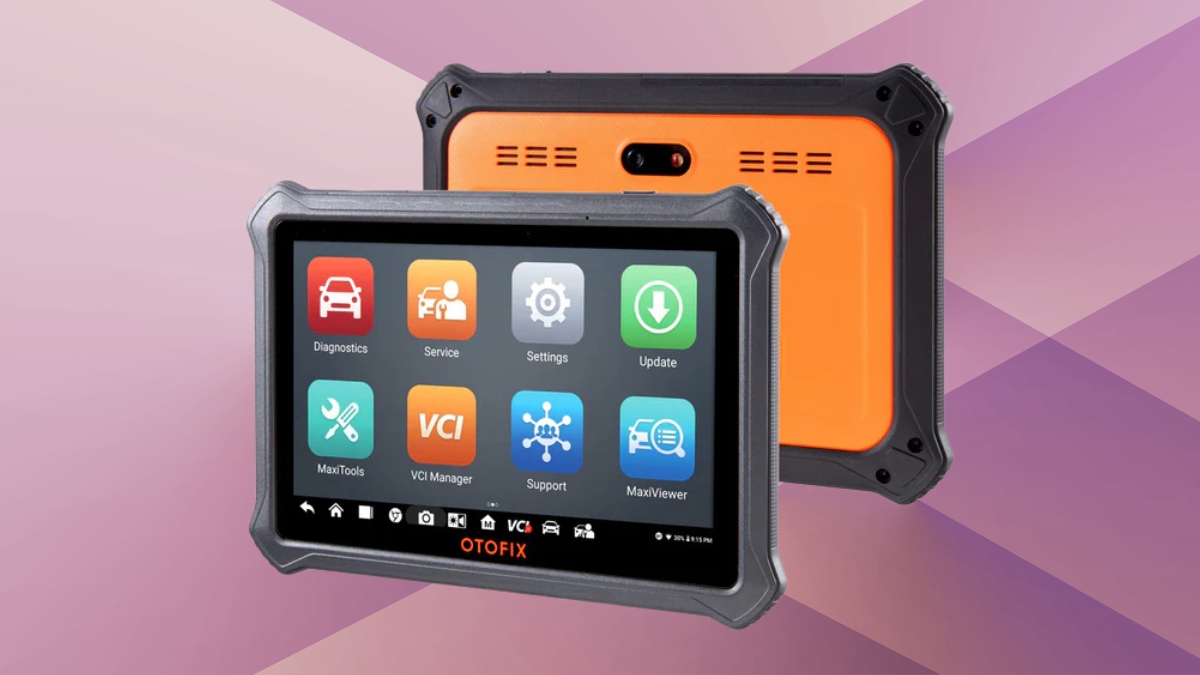
When your main scanner breaks down during a busy week, things can get messy fast. That happened to me not long ago. I needed a tool that wouldn’t cost a fortune but could still handle real work. The OTOFIX D1 Lite caught my attention. And after six months of using it on the job every single day, I can say it’s way better than I expected.
It’s fast. It’s accurate. It doesn’t overcomplicate things. It’s a mid-range diagnostic tablet with pro-level power but none of the heavy price tag drama. With a smooth Android 9 interface, a sharp 7-inch touchscreen, and over 10,000 supported car models, this thing handles business.
Let’s break down what it can actually do and if it’s worth the hype. Here’s everything you need to know.
Using the OTOFIX D1 Lite Feels Like a Pro Experience
If you’re comparing scan tools right now, you’re probably thinking about the Otofix D1 vs D1 Lite or even looking into how it stacks up against Otofix vs Autel. The D1 Lite sits right in that sweet middle zone. It gives you professional tools without asking for dealer-level prices.
This tablet-style scanner is built for techs, shop owners, and serious home mechanics. You get more than a basic code reader without spending a thousand bucks. It pulls full system scans in just a few minutes. It can trigger actuators, test components, and even handle stuff like steering angle resets or throttle body adaptations.
It also speaks fluent AutoVIN, which means it recognizes the car right away when you plug it in. No manual entry. No guessing. Just plug, scan, and go.
OTOFIX D1 Lite Review: Performance That Holds Up in the Shop
The Otofix D1 Lite review starts with the basics: a 1.5GHz quad-core processor, Android 9.0, 2GB RAM, and 64GB internal storage. That’s solid. And it shows. Menus are quick. Switching between live data and functions? Smooth. No lag.
The 7-inch touchscreen hits the right balance. Big enough to see graphs clearly. Small enough to hold with one hand while you’re leaning over an engine bay.
Battery life? Roughly 5 hours on a full charge. That usually gets me through an entire day, especially if I power down during lunch. It charges via USB-C and connects through Bluetooth and Wi-Fi. The wireless OBDII dongle is strong too. No drops, even from across the bay.
Service functions? You get 38+. From oil resets, DPF regeneration, and BMS resets to TPMS relearns, EPB release, and injector coding, it’s a full-service toolkit.
Real Differences: D1 Lite vs D1 Plus vs Other Tools
If you’re trying to choose between OTOFIX tools, here’s a quick comparison.
- Otofix D1 Plus comes with more advanced capabilities like ECU coding.
- The regular D1 offers more storage and deeper access on certain systems.
- But the D1 Lite gives you all the core functions most shops use every day.
Unless you’re doing key programming or flashing ECUs, the Lite model covers almost everything you’ll actually need. And it does so without making your wallet cry.
Compared to similar options like Launch X431 or Foxwell scanners, this one feels faster and cleaner. And don’t forget, you get 2 years of free updates right out of the box. That’s a deal. Updates usually take about 20–30 minutes and run smoothly over Wi-Fi.
What It Costs and What’s in the Box
The OTOFIX D1 Lite sells for around $499. For that, you get:
- The diagnostic tablet
- A wireless Bluetooth OBDII dongle
- All the needed cables
- A decent carrying case
- And 2 years of free updates (worth around $300 alone)
That’s solid value, especially since most competitors charge yearly starting from day one. After your two years are up, it’s about $149 per year if you want to keep getting updates.
Who Should Use the OTOFIX D1 Lite?
This scanner works great for different kinds of users:
For Mobile Mechanics
The wireless setup and lightweight build make it easy to carry. You don’t need to bring five tools for one job anymore. One device handles most cars, and you can send digital reports right from the tool.
For Independent Shops
Fast diagnostics, smart functions, and no downtime. The D1 Lite gets vehicles in and out of bays faster. That means more cars and better workflow.
For DIYers
If you’re serious about working on your own car or helping friends, this is a big step up from those $100 code readers. You’ll be able to reset lights, test components, and even perform calibrations. The investment pays off quickly. One TPMS reset at a shop could cost $75. This tool does it in two minutes.
Anything to Watch Out For?
Like any tool, it has a few limits.
- It won’t do ECU flashing or deep-level coding like dealer tools.
- It doesn’t come with a kickstand. You might want a tablet stand if you plan to use it hands-free.
- New techs might need a few days to get comfortable with the interface.
But those are small things. Overall, it punches above its weight.
A Smart Buy for Serious Diagnostics
The OTOFIX D1 Lite delivers real value. It’s fast. It’s reliable. It does the work most shops and home garages need. The performance feels premium without the price shock. From check engine lights to complex system scans, this scanner holds its ground.
If you’re done messing with budget readers and want something stronger, this is a smart pick. Want one for yourself? You can get the OTOFIX D1 Lite now on Amazon. Look out for deals or bundles that include extra accessories.
Leave a Reply