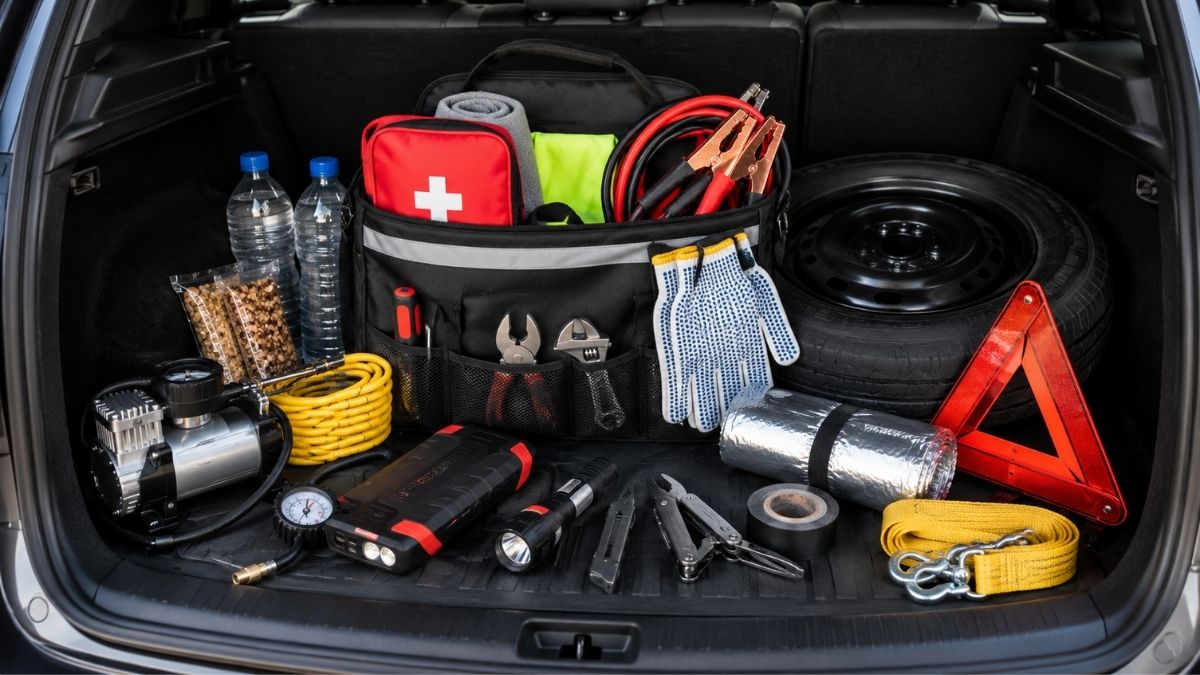
Roadside emergencies can happen without warning. Dead batteries, flat tires, bad weather, or unexpected breakdowns often leave drivers stranded when they least expect it. Keeping a well-stocked emergency car kit helps improve safety and makes stressful situations easier to manage.
A few practical tools and supplies can make a major difference during long trips, harsh weather, or daily commuting.
Jumper Cables or Portable Jump Starter
Dead batteries remain one of the most common roadside problems. Jumper cables allow another vehicle to help restart your car, while portable jump starters provide independent backup power without needing assistance.
When choosing a jump starter or cables, look for:
- Heavy-duty insulated cables
- Compact lithium battery designs
- Built-in flashlights
- USB charging ports
Portable jump starters are especially useful for solo drivers or remote travel situations.
Tire Inflator and Tire Pressure Gauge
Low tire pressure can reduce fuel efficiency and increase the risk of blowouts. A portable tire inflator helps temporarily refill tires until professional repairs are available.
A tire pressure gauge helps you:
- Maintain proper tire pressure
- Improve fuel economy
- Extend tire lifespan
- Reduce uneven tire wear
Regular tire checks can prevent many common roadside emergencies before they happen.
Spare Tire and Tire Changing Tools
Every vehicle should have a properly inflated spare tire along with the tools needed for installation.
Essential tire-changing equipment includes:
- Vehicle jack
- Lug wrench
- Spare tire or repair kit
- Wheel lock key if required
Some newer vehicles include compact spare tires or sealant kits instead of full-size spares. Knowing what your vehicle carries before an emergency is important.
Flashlight and Extra Batteries
Breakdowns often happen at night or during poor weather conditions. A reliable flashlight improves visibility and safety while inspecting your vehicle or waiting for assistance.
LED flashlights are ideal because they:
- Last longer
- Provide brighter light
- Handle rough conditions better
- Use less battery power
Rechargeable models with USB charging add extra convenience.
First Aid Kit
Minor injuries can happen during roadside repairs or accidents. A basic first aid kit allows quick treatment until professional medical help is available.
Recommended items include:
- Adhesive bandages
- Gauze and tape
- Antiseptic wipes
- Disposable gloves
- Pain relievers
- Emergency blanket
Check expiration dates regularly and replace used supplies as needed.
Reflective Warning Triangles or Road Flares
Visibility is critical during roadside emergencies, especially at night or in heavy rain.
Reflective warning devices help:
- Alert approaching drivers
- Reduce accident risks
- Improve roadside visibility
Place warning triangles several feet behind your vehicle for maximum effectiveness.
Multi-Tool or Basic Tool Kit
Simple roadside repairs often require basic tools. A compact emergency tool kit can handle minor problems until professional repairs are available.
Useful tools include:
- Screwdrivers
- Adjustable wrench
- Pliers
- Utility knife
- Duct tape
Multi-tools combine several functions while taking up minimal space.
Phone Charger or Portable Power Bank
A working phone becomes essential during emergencies. Keep charging options inside your vehicle at all times.
Helpful charging items include:
- USB charging cables
- 12V car charger
- Portable battery bank
Power banks are especially valuable during severe weather or extended travel delays.
Emergency Blanket and Extra Clothing
Cold weather can quickly become dangerous if you’re stranded for several hours.
Useful cold-weather supplies include:
- Thermal emergency blankets
- Gloves
- Rain poncho
- Warm clothing layers
These items improve comfort and reduce exposure risks during winter travel.
Non-Perishable Food and Water
Unexpected delays can leave drivers stranded longer than expected. Keeping emergency food and water inside your vehicle provides basic support during long waits.
Good options include:
- Bottled water
- Energy bars
- Trail mix
- Shelf-stable snacks
Replace stored food and water periodically to maintain freshness.
Ice Scraper and Snow Brush
Winter driving requires extra preparation. Ice scrapers and snow brushes improve visibility and help remove dangerous snow buildup before driving.
Drivers in colder climates may also benefit from carrying:
- Small shovel
- Sand or cat litter for traction
- Winter gloves
- Extra windshield washer fluid
A Prepared Vehicle Helps Reduce Stress on the Road
An emergency car kit doesn’t need to be complicated, but it should cover the most common roadside situations. Dead batteries, flat tires, poor weather, and unexpected delays become easier to manage when the right supplies are already in your vehicle.
Keeping these essentials available can improve safety, reduce stress, and help you stay prepared wherever the road takes you.
Leave a Reply