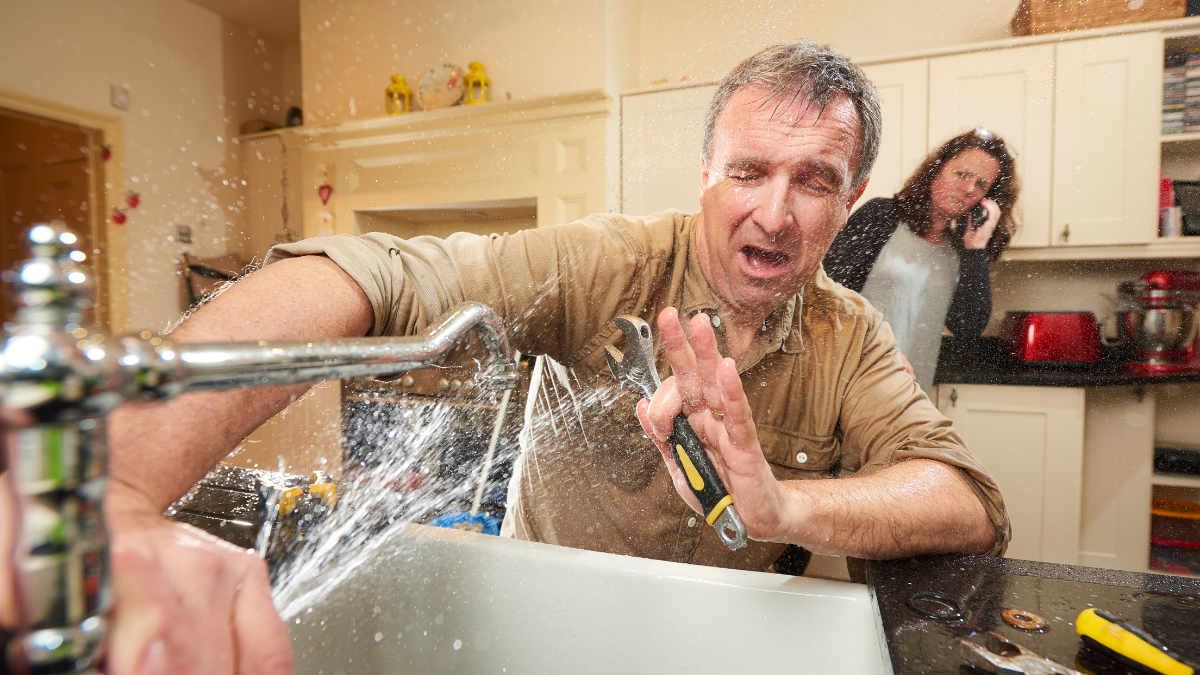
When a plumbing problem appears, you may wonder whether to tackle the repair yourself or call a professional. The right choice depends on much more than how simple the job looks. The source of the problem, your experience, the plumbing’s location, required tools, and potential safety risks all matter.
Some routine maintenance can be manageable for homeowners, while concealed leaks, gas systems, water heaters, and major drainage problems can require specialized expertise.
Start by Identifying the Problem
Before deciding on DIY or professional service, determine what’s actually wrong.
A dripping faucet, running toilet, slow drain, leaking supply line, and ceiling stain can have very different causes. Visible water may also travel from another location before appearing, making the actual source difficult to identify.
If you can’t identify the cause with reasonable confidence, professional diagnosis may be more practical than replacing parts based on guesswork.
Consider Your Plumbing Experience
Experience matters when evaluating a DIY project.
You should be comfortable identifying fittings, using the appropriate tools, shutting off the water, following equipment instructions, and recognizing when something isn’t going according to plan.
Plumbing systems also vary between homes, including pipe materials, valves, fixtures, and connection methods.
Know Which Tasks May Be DIY-Friendly
Depending on your skills and the fixture involved, some basic tasks may be suitable for DIY maintenance.
Examples include:
- Cleaning faucet aerators
- Removing accessible hair from drain screens
- Replacing certain toilet tank components
- Installing approved replacement parts in familiar fixtures
Even straightforward work should follow appropriate instructions, including shutting off the water when necessary. Never force components that are corroded, damaged, or difficult to remove.
Recognize When a Simple Repair Gets Complicated
Plumbing projects don’t always go as planned.
Replacing a faucet might reveal a deteriorated shutoff valve. A seemingly loose connection could actually be damaged. A drain may remain clogged after accessible debris has been removed.
If a repair begins expanding beyond your experience or equipment, stopping can be safer than continuing and potentially causing additional damage.
Consider the Risk of Water Damage
A plumbing mistake can affect more than the pipe or fixture you’re repairing.
Escaping water can damage cabinets, drywall, flooring, insulation, framing, electrical components, and personal belongings. After completing DIY work, inspect connections while the fixture operates and check the area again later for slow leaks.
Think About Accessibility
An exposed faucet component is very different from plumbing located behind a wall, beneath a slab, above a finished ceiling, or inside a confined space.
Opening walls or floors can also introduce risks involving electrical wiring, structural components, and other utilities. Concealed plumbing problems may require specialized leak-detection equipment.
Be More Cautious With Drain Problems
An accessible drain blockage may sometimes be manageable without professional service.
Recurring clogs, multiple slow drains, sewage odors, gurgling fixtures, and wastewater backups can indicate a more extensive drainage problem. Mechanical drain-cleaning equipment can also cause plumbing damage or personal injury when used incorrectly.
Leave Higher-Risk Work to Qualified Professionals
Certain situations deserve considerably more caution.
Professional help may be appropriate for concealed leaks, recurring pipe leaks, burst pipes, severely corroded plumbing, or situations where the water supply can’t be reliably isolated.
Water heaters require additional care because they can involve high-temperature water, pressure, electricity, gas, and combustion systems.
Gas-related plumbing should also not be approached like an ordinary DIY water-line repair. Suspected gas leaks require appropriate emergency or utility guidance.
Don’t Forget Codes and Permits
Plumbing work can be subject to local building codes, permits, and inspection requirements.
Depending on your location and project, requirements may apply to new piping, system alterations, water heater replacements, sewer work, and other significant changes.
Check applicable local requirements before beginning substantial work.
Compare the Full Cost
DIY repairs may initially appear cheaper because you’re not paying for labor, but parts aren’t the only expense.
Tools, replacement materials, permits, disposal, travel, and your time can increase the total cost. An unsuccessful repair may also require additional materials and professional correction.
Compare the complete project rather than the price of one replacement part.
Know When Professional Help Makes Sense
Professional plumbing service may be worth considering for:
- Concealed or damaged piping
- Major or recurring leaks
- Sewer-line problems
- Significant corrosion
- Water heaters
- Gas systems
- Extensive repiping
- Recurring drainage problems
- Work requiring permits
Professional assistance may also make sense when you don’t have the necessary equipment or can’t confidently identify the problem.
Make Safety the Deciding Factor
The most important question isn’t simply whether you can perform a plumbing repair. Consider what could happen if the repair goes wrong.
Projects involving electricity, gas, sewage, high-temperature water, significant pressure, structural openings, or substantial leaks require additional caution.
Basic maintenance and accessible repairs may be reasonable DIY projects when you have the necessary knowledge and tools. For more complicated work, knowing when to stop and call a qualified professional can be just as valuable as knowing how to complete a simple repair.
Leave a Reply