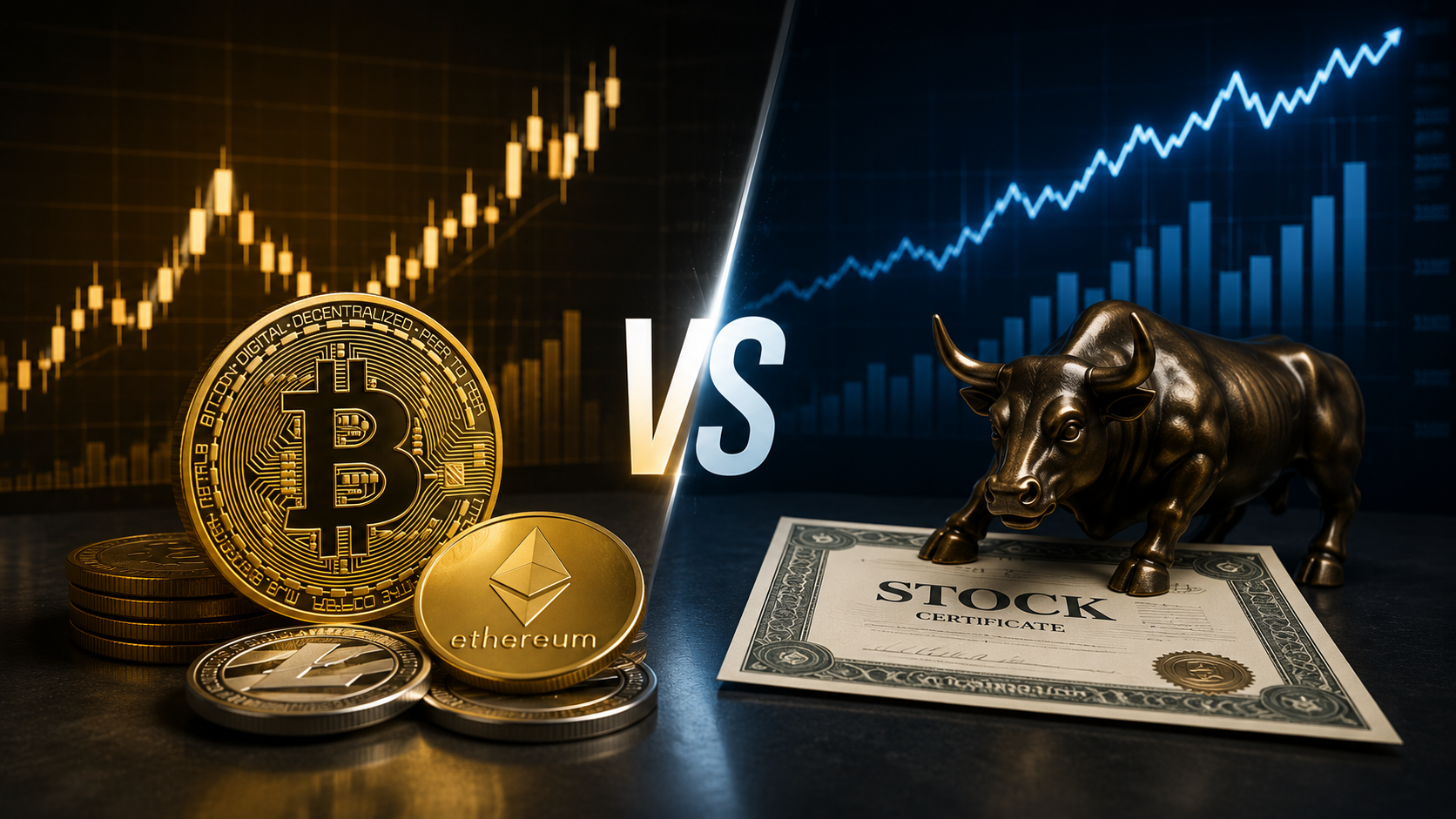
Money talks, and right now it sounds louder than ever. One scroll through social media can leave you stuck between buying Bitcoin or building a stock portfolio.
That’s why “crypto vs stocks” has become one of the most searched investment topics online. People want growth, flexibility, and a smarter way to protect their money from inflation and market swings.
Stocks have a long history tied to real companies and consistent market performance. Crypto brings fast-moving opportunities, new technology, and higher risk. Both can grow your money, though they work in very different ways.
After reviewing trading apps, fee structures, investor reports, and historical performance data, one thing becomes clear: your best option depends on your goals, risk tolerance, and timeline. A short-term trader may lean toward crypto. A long-term investor may prefer dividend-paying stocks.
According to data from Statista, the global cryptocurrency market surpassed 560 million users in 2024, while Gallup reported that 62% of U.S. adults own stocks directly or through retirement accounts. Those numbers show strong interest in both markets.
Here’s how crypto and stocks compare so you can make smarter investment decisions.
Crypto vs Stocks: What Makes Them Different?
The biggest difference comes down to ownership and regulation.
When you buy stocks, you purchase shares in a company. That share can increase in value as the company grows. Some stocks even pay dividends, which means you earn passive income over time.
Crypto works differently. Cryptocurrency is a digital asset powered by blockchain technology. Coins like Bitcoin and Ethereum are decentralized, meaning they are not controlled by banks or governments.
Here’s a simple comparison:
| Feature | Crypto | Stocks |
| Ownership | Digital asset | Company shares |
| Regulation | Limited regulation | Heavily regulated |
| Trading Hours | 24/7 | Market hours only |
| Volatility | Very high | Moderate |
| Dividends | Rare | Common |
| Long-Term History | Around 15 years | Over 100 years |
If you want stability, stocks usually feel safer. If you want rapid price movement and higher growth potential, crypto may look more attractive.
Why Younger Investors Lean Toward Cryptocurrency Investing
Many younger investors prefer crypto because it feels modern, accessible, and fast-moving.
Apps like Coinbase and Binance make buying cryptocurrency simple. Coinbase currently charges a spread fee around 0.5% plus transaction fees based on payment method and order size, according to Coinbase’s official pricing page.
Robinhood also allows commission-free crypto trading, which attracts beginners who want low entry costs.
Several investors shared similar experiences in online finance communities. Many started with small Bitcoin purchases during market dips and later expanded into Ethereum or Solana after gaining confidence. The appeal often comes from flexibility and excitement.
Still, crypto prices can swing hard within hours.
For example:
- Bitcoin dropped over 60% during the 2022 crypto crash
- Several smaller tokens lost nearly all value
- Regulatory uncertainty still affects market confidence
That level of volatility can stress newer investors who expect fast profits.
Stock Market Investing Still Dominates Retirement Planning
Stocks remain one of the most trusted long-term investment options in the United States.
Large companies like Apple, Microsoft, and Nvidia continue generating strong earnings and shareholder value. Investors often use stocks for retirement accounts because the market historically trends upward over long periods.
According to S&P Global data, the S&P 500 has historically averaged around 10% annual returns before inflation over several decades.
Popular stock broker platforms include:
| Platform | Stock Trading Fees | Key Features |
| Fidelity | $0 commission | Retirement tools |
| Charles Schwab | $0 commission | Research features |
| E*TRADE | $0 commission | Beginner-friendly dashboard |
| Robinhood | $0 commission | Simple mobile trading |
Many investors prefer stocks because companies have earnings reports, financial statements, and measurable business performance.
That transparency helps reduce uncertainty.
Best Crypto Platforms and Stock Broker Apps Compared
The platform you use can affect fees, security, and overall investing experience.
After reviewing several major platforms, these stand out for different reasons:
| Platform | Best For | Official U.S. Pricing |
| Coinbase | Beginner crypto investors | Spread + transaction fees |
| Binance.US | Lower crypto trading fees | Fees start around 0.1% |
| Fidelity | Long-term stock investing | $0 stock commissions |
| Robinhood | Simple investing apps | $0 commissions |
Coinbase offers one of the cleanest interfaces for beginners. The mobile app feels simple, though fees can add up quickly for active traders.
Fidelity provides strong educational resources and retirement planning tools. Many investors appreciate the research reports and customer support.
Robinhood feels smooth and fast, though advanced investors may find the research tools limited.
Cryptocurrency vs Traditional Investments: Risk Levels Explained
Risk matters more than hype.
Crypto can produce massive gains during bull markets. At the same time, dramatic losses happen frequently.
Stocks also drop during recessions or economic downturns, though established companies often recover over time.
Here’s a practical breakdown:
Crypto Risks
- Extreme volatility
- Regulatory uncertainty
- Security concerns and hacking risks
- Smaller projects may fail completely
Stock Risks
- Market crashes
- Inflation impact
- Poor company performance
- Slower short-term growth
Many financial advisors suggest balancing high-risk and stable assets instead of putting everything into one category.
That balanced approach can reduce emotional investing decisions.
Can You Make Passive Income From Crypto or Stocks?
Stocks currently offer more reliable passive income opportunities.
Dividend stocks pay investors regularly. Companies like Coca-Cola and Johnson & Johnson have long histories of dividend payments.
Crypto staking also offers passive rewards. Ethereum staking currently provides variable annual yields depending on validator participation and network conditions.
However, crypto staking comes with additional risks:
- Platform failures
- Token price drops
- Locked funds during staking periods
Dividend investing generally feels more predictable for long-term income planning.
Real Investor Experience: What Happens During Market Panic
One investor shared a common experience during the 2022 market downturn.
After seeing Bitcoin fall sharply, panic selling kicked in quickly. Losses stacked up because emotional trading replaced long-term strategy. Meanwhile, dividend-focused stock holdings recovered gradually over the next year.
That experience highlights a major lesson:
Fast-moving markets can trigger emotional decisions.
Many experienced investors now follow these habits:
- Set investment goals early
- Avoid checking prices every hour
- Diversify holdings
- Invest only money they can afford to leave untouched
Those habits often matter more than picking the “perfect” investment.
How Inflation Affects Crypto and Stocks
Inflation changes how investors think about money.
Some crypto supporters call Bitcoin “digital gold” because of its limited supply. They believe it protects purchasing power over time.
Stocks also respond to inflation differently depending on the sector. Energy, technology, and consumer staples companies may perform better during inflationary periods.
Still, neither asset class guarantees protection.
Bitcoin dropped heavily during parts of the recent inflation cycle, even while inflation stayed high. That surprised many investors who expected stronger protection.
Stocks tied to profitable businesses often showed more resilience.
Which Investment Fits Your Personality?
Your personality can influence your investing success more than market timing.
Crypto may fit you better if:
- You can handle fast price swings
- You enjoy technology trends
- You actively monitor markets
- You accept higher risk for higher potential returns
Stocks may fit you better if:
- You prefer long-term planning
- You want lower volatility
- You value company performance data
- You focus on retirement growth
Many investors eventually combine both.
A portfolio with mostly stocks and a smaller crypto allocation can offer growth potential while reducing overall risk.
Common Mistakes New Investors Make
New investors often repeat the same mistakes.
Here are the biggest ones:
- Investing based on social media hype
- Chasing fast profits
- Ignoring fees
- Panic selling during dips
- Failing to diversify
One common issue in crypto comes from buying trending meme coins without researching the project. Several tokens surged quickly in 2021 before collapsing months later.
Stock investors also make mistakes by chasing hot companies with inflated valuations.
Research always matters more than hype.
Final Thoughts
The crypto vs stocks debate continues because both investments offer different advantages.
Stocks provide stability, historical performance, and easier long-term planning. Crypto offers innovation, fast growth potential, and around-the-clock trading access.
You do not need to choose only one.
Many experienced investors build a balanced strategy using both assets. That approach can reduce stress while giving your portfolio exposure to different opportunities.
Start small, learn consistently, and avoid emotional decisions. Markets move fast, though patient investors often make smarter choices over time.
If you want to begin investing, compare fees, study the risks, and test platforms carefully before committing larger amounts. Small steps can build strong financial habits over the long run.
Leave a Reply