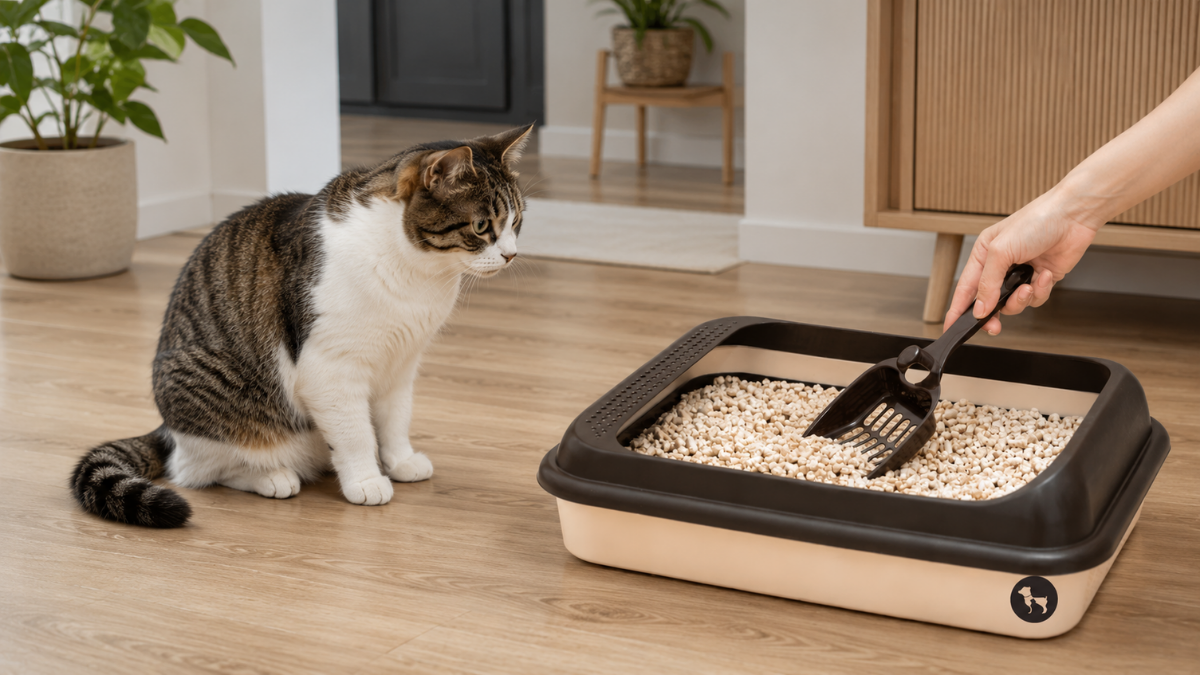
Choosing the right cat litter can make everyday pet care easier while giving your cat a clean, comfortable place to do their business.
With so many choices available—from clumping clay and natural materials to crystals and low-dust formulas—it can be difficult to know which type fits your cat and household best.
The ideal litter depends on several factors, including odor control, absorbency, dust levels, tracking, maintenance, and your cat’s preferences. Understanding these differences can help you create a litter box setup that works well for both you and your feline companion.
What Is Cat Litter?
Cat litter is an absorbent material placed inside a litter box to collect urine and feces. Depending on the formula, it may absorb moisture, form scoopable clumps, reduce unpleasant odors, or make daily cleanup more manageable.
Common materials include clay, silica crystals, corn, wheat, wood, grass, and recycled paper. Each material performs differently, so there isn’t one option that’s automatically best for every household.
Popular Types of Cat Litter
Knowing the main types of litter can narrow down your choices.
| Type | Key Features | May Be Suitable For |
|---|---|---|
| Clumping clay | Forms scoopable clumps | Convenient daily cleaning |
| Non-clumping clay | Absorbs moisture without clumping | Simple litter box setups |
| Silica crystal | Highly absorbent and lightweight | Odor and moisture control |
| Wood or pine | Made from plant-based materials | Owners interested in natural options |
| Corn or wheat | Often biodegradable and clumping | Households seeking alternative materials |
| Recycled paper | Soft with relatively low dust | Cats that prefer softer textures |
Your cat’s acceptance matters as much as convenience. A highly absorbent litter isn’t particularly useful if your cat refuses to use it.
How Does Clumping Cat Litter Work?
Clumping cat litter forms solid or semi-solid clumps when it comes into contact with moisture. You can scoop out the affected areas while leaving much of the clean litter behind.
This can make routine maintenance faster and help keep the litter box fresher between complete changes. Clumping formulas are available in traditional clay as well as some plant-based materials.
What Should You Look for in Cat Litter?
1. Odor Control
Effective cat litter odor control helps manage unpleasant smells without relying entirely on strong fragrances.
Some formulas use activated charcoal, baking soda, minerals, or naturally absorbent materials. Unscented litter may be preferable for cats or owners who dislike heavily perfumed products.
2. Absorbency
Good litter should absorb moisture efficiently. High absorbency can keep the litter box drier and make cleanup easier.
Crystal and clumping formulas are popular choices when moisture management is a priority.
3. Dust Levels
Pouring or scooping some traditional litter products can create noticeable dust. A low-dust cat litter formula may help keep the surrounding floor and furniture cleaner.
Checking packaging for low-dust or dust-control claims can help you compare products.
4. Tracking
Tracking happens when small litter particles stick to your cat’s paws and travel beyond the litter box.
Larger or heavier granules may reduce tracking, although results vary by product and cat. Placing a litter mat outside the box can catch additional particles.
5. Texture
Cats can have surprisingly strong opinions about litter texture. Some prefer fine, sand-like granules, while others comfortably use pellets or crystals.
When introducing a different litter, gradually mixing the new product with the existing litter may make the transition easier.
Scented vs. Unscented Cat Litter
Scented litter is designed to mask or neutralize litter box smells, while unscented cat litter focuses on absorption and odor control without added fragrance.
Strong fragrances may smell fresh to people but can be overwhelming for some cats. If your cat avoids a newly changed litter box, fragrance or texture could be contributing to the problem.
For many households, an unscented formula combined with frequent scooping provides straightforward odor management.
Natural Cat Litter Options
Natural cat litter has become an alternative to conventional clay products. These formulas may use materials such as:
- Wood or pine
- Corn
- Wheat
- Grass
- Walnut shells
- Recycled paper
Some plant-based options are biodegradable, lightweight, or renewable. However, performance varies significantly between products. Compare clumping ability, odor control, tracking, and recommended disposal instructions before choosing one.
How Much Cat Litter Should You Use?
A litter depth of around 2–3 inches works for many cats. Enough litter should be available for digging and covering waste without making the box unnecessarily deep.
Your cat may prefer slightly more or less. Watch how your cat uses the box and adjust the depth accordingly.
Adding fresh litter after scooping can help maintain a consistent level.
How Often Should You Clean a Cat Litter Box?
Daily maintenance can make a big difference.
Scoop urine clumps and solid waste at least once a day when using a scoopable formula. Add clean litter when necessary to maintain the appropriate depth.
Periodically empty the entire box and clean it according to the litter manufacturer’s recommendations. Avoid leaving strong chemical odors behind, since cats have sensitive noses.
How Many Litter Boxes Do Cats Need?
A commonly used guideline is one litter box per cat, plus one additional box.
For example, a household with two cats might provide three litter boxes. Multiple boxes give cats more choices and can reduce competition in multi-cat households.
Place boxes in accessible, relatively quiet locations rather than clustering every box in one area.
How Can You Reduce Cat Litter Tracking?
A few practical adjustments may help keep stray litter under control:
- Place a textured litter mat beneath or outside the box.
- Consider larger or heavier litter granules.
- Use a box with higher sides if appropriate for your cat.
- Sweep or vacuum the surrounding area regularly.
- Avoid overfilling the litter box.
What Is the Best Cat Litter for Your Home?
The best cat litter is one that your cat consistently uses and that fits your cleaning routine. Consider odor control, absorbency, dust, tracking, texture, price, and how frequently you want to maintain the box.
A busy multi-cat household may prioritize strong clumping and odor management. Someone living in a smaller space might focus on low tracking and odor control, while another household may prefer biodegradable plant-based materials.
Tips for Switching to a New Cat Litter
Cats sometimes resist sudden changes, so introducing new litter gradually can help.
Start by adding a small amount of the new litter to the existing product. Increase the proportion over several days while monitoring your cat’s behavior.
If your cat suddenly stops using the litter box, don’t assume stubbornness is the cause. Litter preferences, box cleanliness, location, stress, and health concerns can all influence litter box behavior. Persistent changes in elimination habits may warrant veterinary attention.
Creating a Cleaner and More Comfortable Litter Box Routine
Choosing cat litter comes down to balancing your cat’s comfort with practical household needs. Clumping performance, absorbency, odor control, dust, tracking, material, and texture are all worth considering.
Once you find a formula your cat accepts, consistent scooping and regular litter box cleaning can do much of the heavy lifting.
Leave a Reply