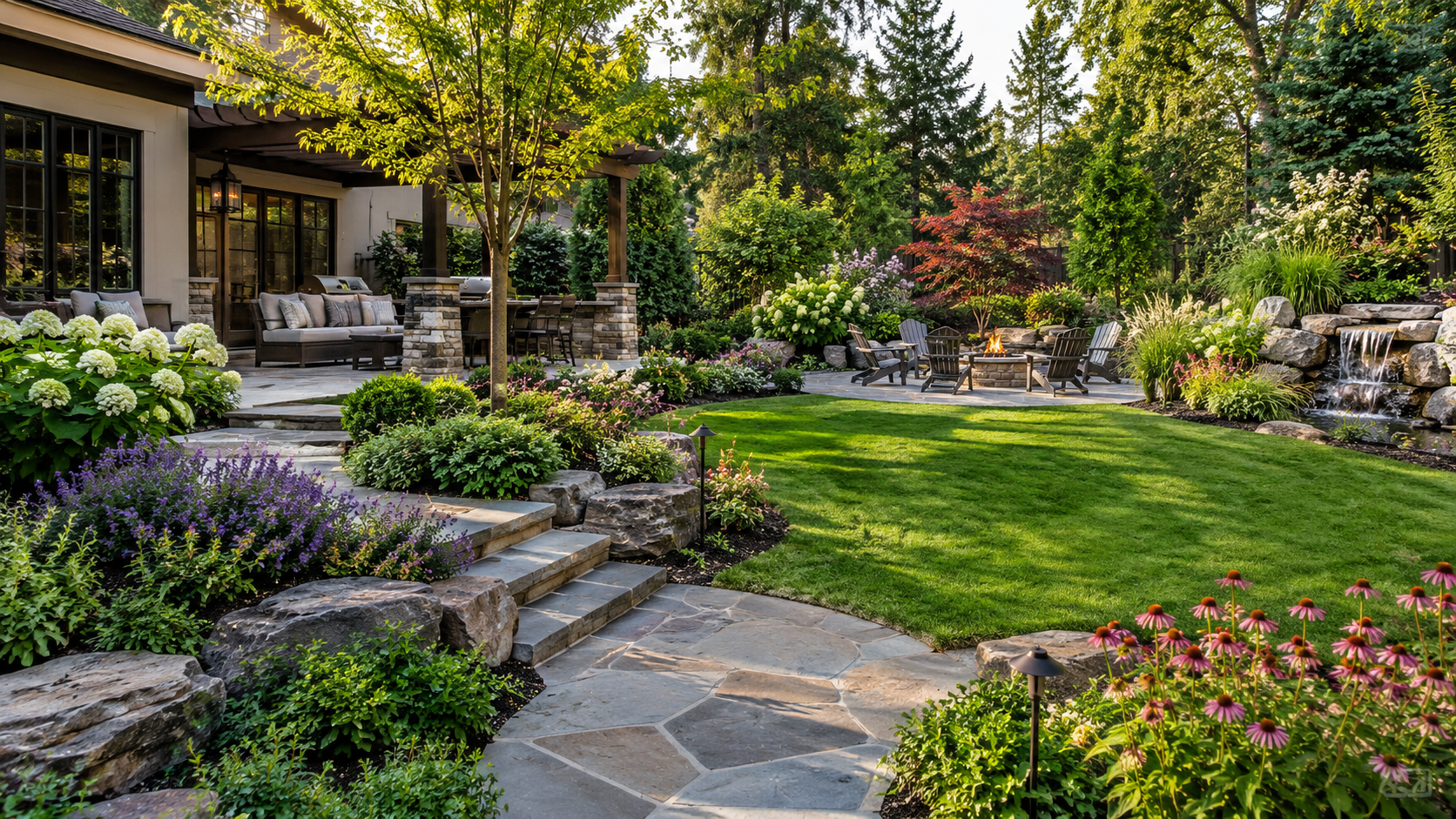
Outdoor landscaping can completely change how your property looks, feels, and functions.
A thoughtfully planned yard may give you more space to relax, entertain guests, grow plants, or simply enjoy a cleaner and more attractive outdoor environment.
You do not need an enormous property or a complicated design to make noticeable improvements.
From maintaining healthy grass to adding walkways, flower beds, lighting, and outdoor seating, you have many ways to improve your surroundings.
What Is Outdoor Landscaping?
Outdoor landscaping involves planning, designing, installing, and maintaining the natural and structural features around your home or property.
It may include:
- Lawn installation and maintenance
- Trees, shrubs, flowers, and garden beds
- Walkways and pathways
- Patios and outdoor seating areas
- Retaining walls
- Mulching
- Landscape lighting
- Irrigation systems
- Decorative stones
- Fences and borders
- Drainage improvements
A successful landscape combines appearance with practical function. For example, plants may add color while also creating privacy, while pathways may improve accessibility and help protect your lawn from heavy foot traffic.
Benefits of Outdoor Landscaping for Your Property
Good landscaping may provide more than visual appeal. Your outdoor space can become easier to use, maintain, and enjoy when the design is carefully planned.
Improve Your Property’s Appearance
Landscaping can help create a polished and welcoming exterior. Well-maintained lawns, trimmed shrubs, colorful flowers, and clearly defined walkways may make your property appear more organized.
Small improvements can also make a noticeable difference. Fresh mulch, neatly edged garden beds, and healthy plants may refresh an older yard without requiring a complete redesign.
Create More Usable Outdoor Space
Your yard can become an extension of your living area.
A patio, deck, pergola, or seating area may provide space for:
- Outdoor meals
- Family gatherings
- Gardening
- Relaxation
- Children’s activities
- Entertaining guests
Planning these areas carefully may help you make better use of available space.
Support Privacy Around Your Home
Trees, hedges, shrubs, fencing, and trellises may help create greater separation between your property and nearby homes or streets.
Dense evergreen plants are often used when year-round privacy is important. Decorative fencing combined with plants may also create a softer and more natural appearance.
Help Manage Drainage
Proper outdoor landscaping may reduce problems caused by standing water or poor drainage.
Grading, drainage channels, rain gardens, permeable surfaces, and carefully positioned plants can help direct water away from areas where it might cause problems.
Drainage should usually be considered early in your landscaping plan, especially if your property experiences frequent pooling after heavy rain.
How to Plan Your Outdoor Landscaping Project
A successful landscaping project usually begins with a clear plan rather than immediately purchasing plants or materials.
Evaluate Your Existing Yard
Walk around your property and identify what currently works and what needs improvement.
Look for:
- Bare lawn areas
- Overgrown plants
- Poor drainage
- Damaged walkways
- Unused spaces
- Areas receiving heavy sunlight
- Shaded areas
- Privacy concerns
- Sloped ground
Understanding existing conditions may help you avoid spending money on features that do not suit your yard.
Decide How You Want to Use the Space
Think about your priorities before choosing landscaping elements.
You might want your yard to provide:
- A play area
- A vegetable garden
- Outdoor dining
- A peaceful seating area
- More privacy
- Easier maintenance
- Better curb appeal
Your priorities can guide the layout and help determine where your budget should go.
Establish a Realistic Budget
Outdoor landscaping costs can vary significantly depending on the size of the property, materials, plant selection, labor, and project complexity.
Simple upgrades such as mulch, small plants, and edging might cost a few hundred dollars.
Larger projects involving patios, retaining walls, irrigation systems, lighting, or extensive planting may cost several thousand dollars or more.
Choosing Plants for Outdoor Landscaping
Plants are one of the most important parts of landscaping, but they should be selected carefully.
Consider Your Climate
Choose plants that can grow successfully in your local conditions.
Factors to consider include:
- Average temperatures
- Seasonal rainfall
- Humidity
- Soil type
- Sunlight
- Wind exposure
Native or climate-adapted plants may require less water and maintenance once established.
Consider Sun and Shade
Some plants need several hours of direct sunlight each day, while others perform better in partial or full shade.
Watch how sunlight moves across your property during the day before deciding where different plants should go.
Mix Different Plant Sizes
Combining trees, shrubs, ground covers, flowers, and ornamental grasses can create depth and visual interest.
You can also layer plants by placing taller varieties toward the back of garden beds and shorter plants near the front.
Hardscaping Ideas for Your Outdoor Space
Hardscaping refers to non-living landscaping features. These structures can make your yard more functional and help define individual areas.
Patios
A patio can provide a solid surface for outdoor furniture, grills, and dining areas.
Popular materials include:
- Concrete
- Brick
- Natural stone
- Pavers
- Gravel
Each material offers a different look, maintenance level, and price range.
Walkways
Walkways can connect entrances, gardens, patios, and other outdoor spaces.
They may also reduce wear on your lawn by creating designated routes through the property.
Retaining Walls
Retaining walls may help manage slopes, control soil movement, and create raised planting areas.
They can be built using materials such as stone, concrete blocks, brick, or timber.
Landscape Edging
Edging creates clear boundaries between lawns, garden beds, walkways, and other areas.
Common materials include metal, plastic, stone, brick, and concrete.
How Landscape Lighting Can Improve Your Yard
Outdoor lighting may increase visibility while highlighting attractive landscaping features after sunset.
You can use lighting around:
- Walkways
- Steps
- Patios
- Trees
- Garden beds
- Driveways
- Entrances
Low-voltage LED systems are commonly used because they may consume less electricity than older outdoor lighting options.
Solar-powered lights may also work for decorative purposes, although performance can depend on sunlight exposure.
Irrigation and Watering Considerations
Plants need consistent watering, particularly during establishment.
Depending on your landscaping design, you may use:
- Garden hoses
- Sprinklers
- Drip irrigation
- Soaker hoses
- Automatic irrigation systems
Automatic irrigation systems may provide additional convenience but usually require a larger initial investment.
Low-Maintenance Outdoor Landscaping Ideas
If you want an attractive yard without spending significant time on maintenance, choose simpler landscaping features.
You might consider:
- Native plants
- Drought-tolerant plants
- Mulched garden beds
- Decorative gravel
- Slow-growing shrubs
- Automatic irrigation
- Perennial flowers
- Artificial turf in selected areas
- Ground-cover plants
Keeping the overall design simple may also make routine maintenance easier.
Seasonal Outdoor Landscaping Maintenance
Your landscaping needs may change throughout the year.
Spring
Spring maintenance may include:
- Removing debris
- Trimming damaged branches
- Applying fresh mulch
- Fertilizing lawns
- Planting flowers
- Checking irrigation systems
Summer
During warmer weather, focus on:
- Regular watering
- Lawn mowing
- Weed removal
- Pest monitoring
- Pruning when appropriate
Fall
Fall tasks may include:
- Removing fallen leaves
- Planting certain trees and shrubs
- Preparing lawns for cooler weather
- Cleaning garden beds
Winter
In colder regions, winter landscaping may involve protecting sensitive plants and monitoring damage caused by freezing temperatures or storms.
Should You Hire Professional Landscapers?
You can complete many smaller landscaping projects yourself, especially basic planting, mulching, edging, and lawn maintenance.
Professional landscaping services may be useful for larger or more technical projects involving:
- Major grading
- Drainage systems
- Retaining walls
- Large patios
- Irrigation installation
- Electrical landscape lighting
- Tree removal
- Complex landscape designs
Before hiring a contractor, compare estimates, review previous projects, and confirm what services are included in the quoted price.
Common Outdoor Landscaping Mistakes to Avoid
Planning ahead may help you avoid costly changes later.
Some common mistakes include:
- Planting trees too close to buildings
- Ignoring mature plant size
- Choosing plants unsuitable for local conditions
- Overwatering
- Installing features without considering drainage
- Using too many unrelated materials
- Creating a design that requires excessive maintenance
A simple, coordinated design is often easier to manage than a yard filled with too many competing features.
Transform Your Yard With Thoughtful Outdoor Landscaping
You can begin with small projects such as trimming plants, improving garden beds, or creating a simple walkway before moving into larger improvements.
Focus on features that make your outdoor space more useful while matching the style of your property.
With thoughtful planning, appropriate plants, practical hardscaping, and consistent maintenance, your yard may become a comfortable and attractive area you can enjoy throughout the year.
Leave a Reply