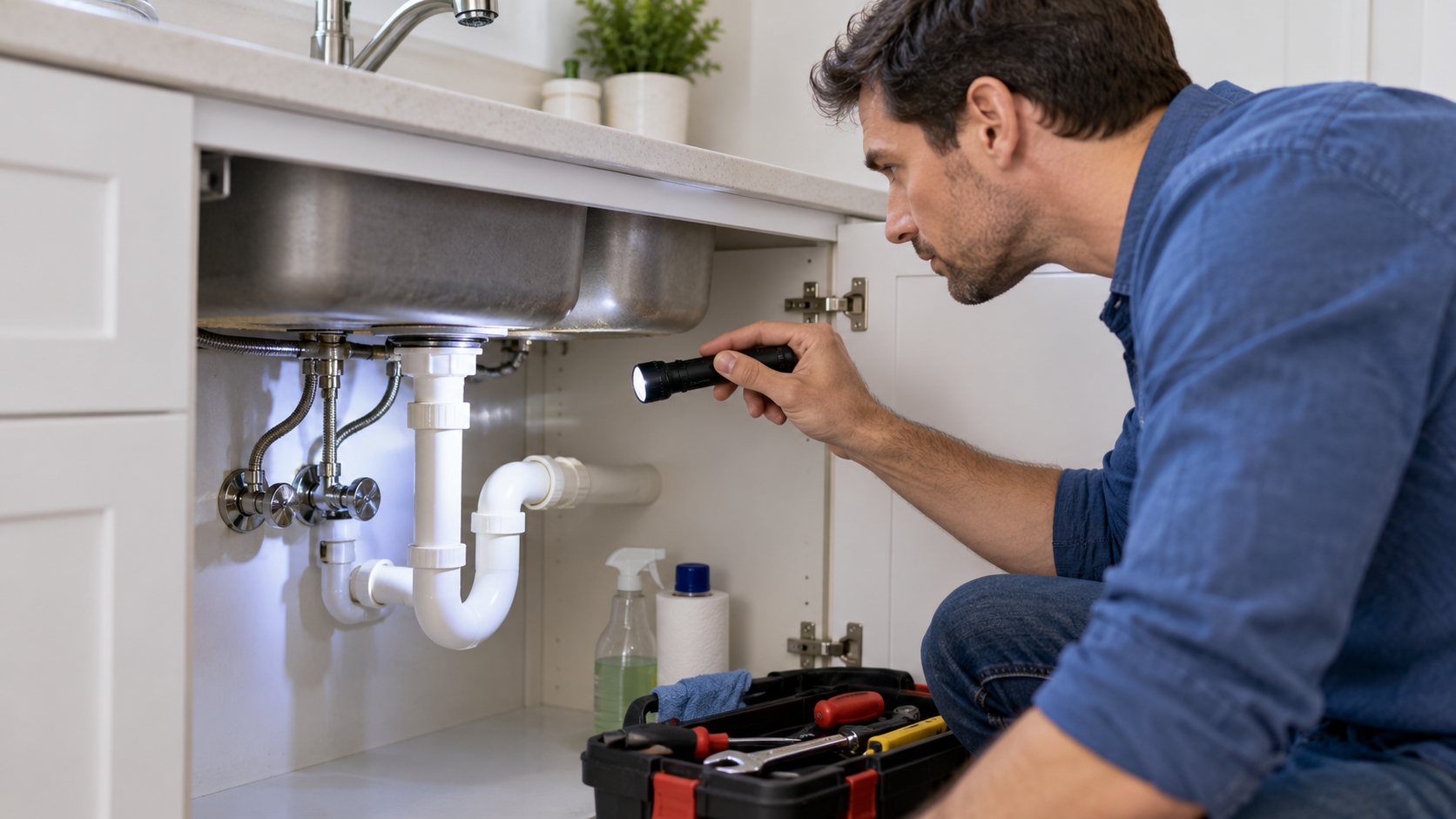
Your plumbing system works every day, often without much attention until something goes wrong. A dripping fixture, slow drain, unusual water pressure, or hidden leak can signal a developing problem. Regular inspections can help you notice these changes sooner and determine when professional attention may be needed.
A practical maintenance routine doesn’t have to be complicated. Focus on the areas you can safely inspect and know when a problem is beyond a basic homeowner task.
Check Faucets and Fixtures for Leaks
Periodically inspect faucets, showerheads, tub spouts, and exposed connections for dripping or moisture.
Look around fixtures for staining, dampness, swelling, or other deterioration. Remember that visible water damage may appear some distance from the actual source, so recurring moisture deserves further investigation.
Inspect Under Your Sinks
The cabinets beneath kitchen and bathroom sinks can conceal slow leaks.
Check supply lines, shutoff valves, drain connections, traps, and cabinet surfaces. Keeping these areas reasonably uncluttered also makes it easier to spot moisture before significant deterioration occurs.
Watch Your Toilets for Problems
Toilets can leak around the base, supply connection, shutoff valve, or internal tank components.
Frequent running or unexplained refilling may indicate that internal components aren’t sealing properly. Movement at the base or recurring floor-level moisture should also be investigated promptly.
Keep Drains Clear
Hair, soap residue, grease, food particles, and other debris can gradually restrict drainage.
Use appropriate strainers or screens to prevent unwanted materials from entering drains. Avoid pouring cooking grease or oil down kitchen sinks, and regularly remove accessible hair buildup from bathroom drains.
Be cautious with chemical drain cleaners. Products differ considerably, and repeated treatment may not address an underlying plumbing problem. Persistent or multiple clogs may require professional diagnosis.
Know Your Main Water Shutoff
Locate your home’s main water shutoff before you need it.
Knowing where it is and how it operates can be important when dealing with a sudden plumbing problem. Individual fixtures and appliances may also have separate shutoff valves.
Don’t force a valve that’s corroded, damaged, or difficult to move. Have a qualified plumber evaluate it instead.
Inspect Exposed Pipes
Check visible pipes in basements, garages, utility rooms, crawl spaces, and beneath sinks.
Look for dripping, corrosion, discoloration, damaged supports, and unusual moisture. Condensation can sometimes make pipes wet without an actual leak, but persistent or unexplained moisture should still be investigated.
Pay Attention to Water Pressure
Changes in water pressure can provide clues about your plumbing.
Low pressure affecting only one faucet may have a localized cause, while changes throughout the home can indicate a different issue. Excessively high pressure can also place stress on plumbing components.
Avoid making adjustments without understanding the cause.
Maintain Faucets and Showerheads
Mineral deposits and debris can accumulate in faucet aerators and showerheads, particularly where hard water is common.
Clean removable components according to their maintenance instructions. If weak flow continues afterward, the cause may be elsewhere in the plumbing system.
Check Your Water Heater
Water heater maintenance varies according to the equipment type, fuel source, water conditions, and manufacturer requirements.
You can visually inspect accessible areas for corrosion, leaks, unusual sounds, or other changes. More specialized work involving hot water, pressure, electricity, gas, or combustion should be handled according to manufacturer guidance and by qualified professionals when appropriate.
Inspect Appliance Water Connections
Washing machines, dishwashers, refrigerators, and other water-connected appliances can develop leaks around hoses, valves, fittings, or internal components.
Periodically inspect accessible connections and surrounding surfaces. Replace deteriorated components according to applicable equipment guidance.
Watch for Hidden Leak Warning Signs
Some plumbing leaks aren’t immediately visible.
Possible warning signs include unexplained stains, damp areas, musty odors, peeling finishes, unusual running-water sounds, or unexpected changes in water consumption.
Hidden leaks can require specialized detection equipment, so avoid opening walls or floors unless you understand the location of plumbing, wiring, and other building systems.
Know When to Call a Plumber
Recurring backups, multiple slow drains, persistent leaks, unexplained pressure loss, water heater problems, damaged pipes, and suspected sewer-line issues can require professional assistance.
For a major leak, shutting off the water may help limit additional water flow when it can be done safely. Situations involving electricity, sewage, contaminated water, gas equipment, or structural damage require additional precautions.
Make Plumbing Checks Part of Home Maintenance
You don’t need to inspect your plumbing constantly. Periodically checking fixtures, drains, exposed pipes, appliance connections, shutoff valves, and water-heating equipment can make developing changes easier to notice.
No maintenance routine can prevent every plumbing problem. However, paying attention to small changes and responding appropriately can help you maintain your system and recognize when it’s time to bring in a qualified professional.
Leave a Reply