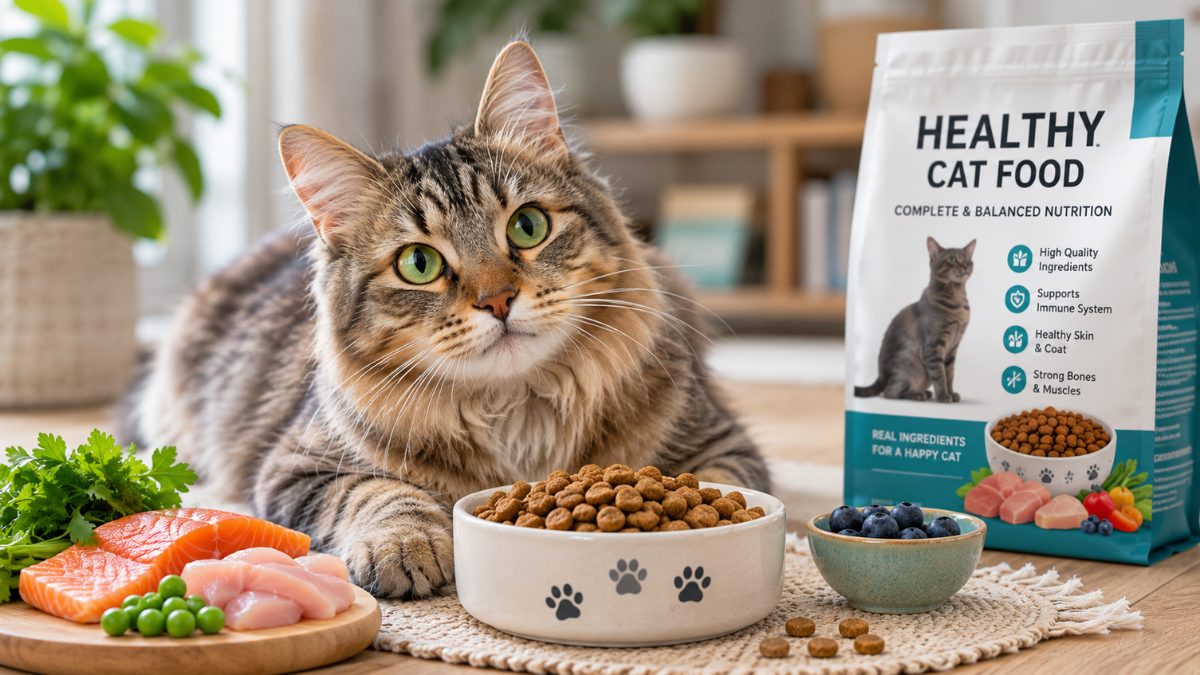
Choosing healthy cat food can make a meaningful difference in your cat’s everyday nutrition and overall well-being. Cats have specific dietary needs, so the right food should provide appropriate amounts of protein, fats, vitamins, minerals, and other essential nutrients.
With dry food, wet food, grain-free recipes, limited-ingredient formulas, and life-stage diets filling store shelves, finding the right option can feel complicated.
Understanding what cats actually need can help you compare products with more confidence.
What Makes Healthy Cat Food a Good Choice?
Healthy cat food should provide complete and balanced nutrition appropriate for your cat’s life stage. Because cats are obligate carnivores, animal-derived nutrients play an important role in their diet.
When comparing foods, look for formulas that provide:
- Quality animal-based protein
- Essential amino acids, including taurine
- Appropriate amounts of dietary fat
- Essential fatty acids
- Vitamins and minerals
- Adequate moisture, particularly from wet foods
- Calories appropriate for your cat’s age and activity level
A food labeled as complete and balanced for your cat’s particular life stage can be a useful starting point.
Why Is Protein Important in Healthy Cat Food?
Protein supplies amino acids that cats need for normal body functions and maintenance of muscle and other tissues.
Common sources of high-protein cat food include chicken, turkey, beef, fish, and other animal ingredients. However, ingredient quality and the overall nutritional formulation matter more than simply choosing the product with the highest protein number.
Taurine deserves particular attention. Cats require this amino acid in their diets because inadequate intake can contribute to serious health problems.
Wet Cat Food vs. Dry Cat Food
Both wet and dry foods can fit into a balanced feeding routine when they provide appropriate nutrition.
| Feature | Wet Cat Food | Dry Cat Food |
|---|---|---|
| Moisture | Generally high | Generally low |
| Storage after opening | Requires refrigeration | Usually easy to store |
| Portioning | Often sold in cans or pouches | Easy to measure |
| Hydration support | Provides additional dietary moisture | Cats need separate access to water |
| Calorie density | Varies by recipe | Often more calorie-dense by volume |
Wet cat food can be particularly useful for increasing dietary moisture. Dry food, meanwhile, offers convenience and may work well for cats that prefer crunchy textures.
Some households use a combination of both.
What Ingredients Should You Look for in Healthy Cat Food?
Reading the ingredient list and nutritional information together gives you a better understanding of a product.
Animal Protein Sources
Look for clearly identified ingredients such as chicken, turkey, salmon, beef, or other animal protein sources.
Taurine
Taurine is an essential nutrient for cats and should be supplied in nutritionally complete cat food.
Essential Fatty Acids
Dietary fats provide energy and essential fatty acids. Certain formulas may also contain omega-3 and omega-6 fatty acids.
Vitamins and Minerals
A complete diet should contain appropriate amounts of essential vitamins and minerals. More isn’t necessarily better, so supplementation generally shouldn’t be added to a complete diet without professional guidance.
Appropriate Carbohydrates
Cats have different nutritional requirements from humans. Instead of focusing on whether a food contains carbohydrates at all, consider the nutritional balance of the complete recipe.
Is Grain-Free Cat Food Healthier?
Grain-free cat food isn’t automatically healthier than food containing grains.
The more important question is whether the complete recipe provides appropriate nutrition for your cat. A grain-free label alone doesn’t tell you about the food’s protein quality, calorie content, nutrient balance, or suitability for a particular cat.
If you suspect your cat reacts poorly to a particular ingredient, discussing the problem with a veterinarian is preferable to eliminating ingredients based solely on assumptions.
How Much Should You Feed Your Cat?
The right serving size depends on several factors, including:
- Age
- Current weight
- Body condition
- Activity level
- Reproductive status
- Calorie density of the food
- Individual health needs
Start with the manufacturer’s feeding recommendations, but remember that these are general guidelines.
Regularly monitoring your cat’s weight and body condition can help determine whether portions need adjusting. A veterinarian can provide more individualized feeding recommendations.
Healthy Cat Food for Kittens
Kittens need nutrition designed to support growth and development. Kitten food is generally more energy-dense and formulated differently from standard adult cat food.
Look for a complete and balanced formula specifically intended for growth or kittens.
Young kittens may also benefit from several smaller meals throughout the day rather than one large meal.
Healthy Cat Food for Adult Cats
Once cats reach adulthood, their nutritional priorities change. Adult formulas are generally designed for maintenance rather than rapid growth.
A suitable adult cat diet should provide adequate protein and essential nutrients without supplying excessive calories.
Indoor and less-active cats may require careful portion control because their energy requirements can be lower than highly active cats.
Healthy Cat Food for Senior Cats
Older cats can have changing nutritional and calorie requirements. Some maintain their weight easily, while others may lose weight or develop health conditions that affect dietary needs.
Senior cat nutrition should therefore be considered individually rather than assuming every older cat needs the same specialized food.
Regular veterinary examinations become especially useful as cats age because changes in appetite, drinking habits, or body weight can sometimes signal an underlying health issue.
How Can You Switch to a New Cat Food?
Changing foods gradually may reduce the likelihood of digestive upset.
A transition might look like this:
- Begin with mostly the current food and a small amount of the new food.
- Gradually increase the proportion of new food over several days.
- Continue reducing the previous food.
- Monitor your cat’s appetite, stool, and general behavior.
- Complete the transition if your cat is tolerating the new diet well.
Some cats may require a slower transition, especially if they’re particularly sensitive to dietary changes.
Does Expensive Cat Food Mean Better Nutrition?
Not necessarily.
Premium packaging, unusual ingredients, or a higher price don’t automatically make a product nutritionally superior. Instead, compare products based on their nutritional adequacy, calorie content, formulation, your cat’s individual needs, and feeding cost.
For example, one formula may cost $20–$35 per bag while another costs $40–$70 or more, depending on bag size, ingredients, and manufacturer.
Wet food may range from roughly $1–$4+ per can or pouch. Prices vary considerably by retailer, package size, and location.
Frequently Asked Questions About Healthy Cat Food
What is the healthiest food to feed a cat?
There isn’t one food that’s healthiest for every cat. Look for a complete and balanced diet appropriate for your cat’s age, body condition, lifestyle, and individual nutritional needs.
Is wet food healthier than dry food?
Neither format is automatically healthier. Wet food provides substantially more moisture, while dry food can be convenient and easy to portion. Nutritional adequacy and suitability for the individual cat matter most.
Can cats eat homemade food?
Homemade diets can be difficult to formulate correctly because cats require specific amounts and ratios of essential nutrients.
A homemade diet should ideally be developed with guidance from a veterinarian or veterinary nutrition specialist.
Should cats eat the same food every day?
A nutritionally complete food can serve as a cat’s regular diet. If you decide to introduce a different food, gradual transitions can help minimize digestive problems.
How can you tell if your cat’s food is working well?
Healthy body condition, stable weight, normal stools, a healthy coat, and normal energy can all be useful observations.
Persistent vomiting, diarrhea, appetite changes, unexplained weight changes, or other concerning symptoms warrant veterinary attention.
Building a Healthy Feeding Routine for Your Cat
Choosing healthy cat food is less about finding a trendy ingredient and more about meeting your cat’s nutritional needs consistently.
Focus on complete and balanced nutrition, appropriate portions, adequate hydration, and a formula suited to your cat’s life stage.
Pay attention to how your cat responds over time, too. Age, activity level, weight, and health can change nutritional needs, so the food that works today may need adjusting later.
Leave a Reply