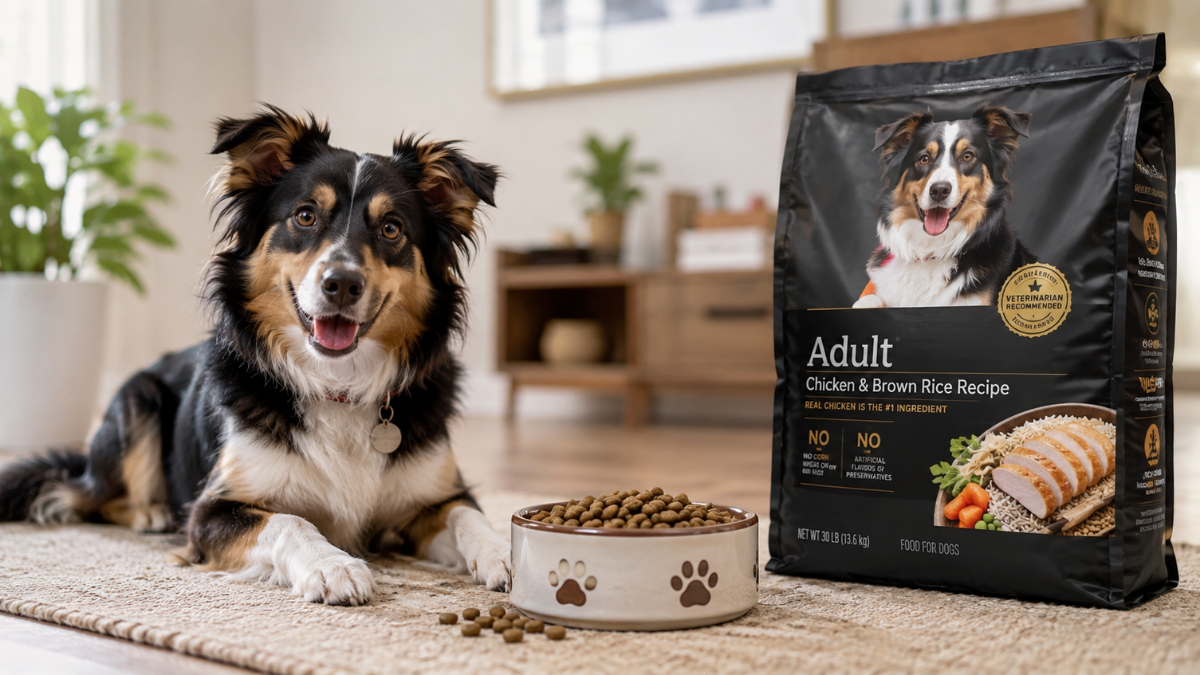
Finding the best dog food can feel complicated when shelves are packed with different recipes, protein sources, life-stage formulas, and feeding claims.
The right choice depends less on flashy packaging and more on your dog’s age, size, activity level, dietary needs, and overall health.
A good dog food should provide balanced nutrition while being appropriate for your dog’s particular life stage.
Best Dog Food: What Should You Look for First?
When choosing the best dog food, start by looking beyond the front of the package. The ingredient list, nutritional adequacy statement, calorie information, and feeding directions can tell you much more about whether a product suits your dog.
Important factors to consider include:
- Your dog’s age and life stage
- Breed and adult size
- Daily activity level
- Calorie requirements
- Protein and fat content
- Food allergies or sensitivities
- Existing health considerations
- Your veterinarian’s recommendations
Dogs have different nutritional requirements throughout their lives, so food that works well for an active adult may not be suitable for a growing puppy or less-active senior dog.
Understanding Complete and Balanced Dog Nutrition
One of the most important things to look for is whether the food is formulated to provide complete and balanced nutrition for the appropriate life stage.
A balanced diet generally supplies essential nutrients from several categories, including protein, fats, carbohydrates, vitamins, minerals, and water.
Protein
Protein provides amino acids that support muscles and other body tissues. Dog foods may contain protein from chicken, turkey, beef, lamb, fish, eggs, or plant-based ingredients.
A higher protein percentage does not automatically mean a food is better. The overall formulation, digestibility, calorie content, and suitability for your dog matter too.
Fats
Dietary fats provide concentrated energy and essential fatty acids. Omega-3 and omega-6 fatty acids may also contribute to normal skin and coat health when included as part of a nutritionally balanced diet.
Common fat sources include fish oil, chicken fat, and plant oils.
Carbohydrates and Fiber
Ingredients such as rice, oats, barley, potatoes, peas, and other vegetables may provide carbohydrates, fiber, and additional nutrients.
Vitamins and Minerals
Balanced dog foods contain vitamins and minerals needed for normal body functions. Calcium and phosphorus, for example, are particularly important during growth and need to be supplied in appropriate proportions.
Comparing Popular Types of Dog Food
There is no single food format that works best for every dog. Each option has advantages and practical considerations.
| Dog Food Type | Potential Advantages | Things to Consider |
|---|---|---|
| Dry kibble | Convenient, easy to measure and store | Moisture content is relatively low |
| Wet food | High moisture and often highly palatable | Usually costs more per serving |
| Fresh food | Often made with recognizable ingredients | Storage and refrigeration may be necessary |
| Freeze-dried food | Lightweight and convenient | Can be relatively expensive |
| Veterinary diet | Designed for specific nutritional purposes | May require veterinary guidance or authorization |
Some owners also combine wet and dry foods. If you mix different foods, remember to account for calories from both sources rather than serving two full portions.
Best Dog Food for Puppies
Puppies need food formulated specifically for growth. Growing dogs require sufficient energy and carefully balanced nutrients to support normal development.
For puppies, look for a puppy food or another formula identified as nutritionally appropriate for growth.
Large-breed puppies deserve particular attention because excessive calories or inappropriate mineral balance during growth may contribute to developmental concerns.
Choosing food specifically formulated for large-breed puppies may therefore be appropriate.
Best Dog Food for Adult Dogs
Most healthy adult dogs need a balanced maintenance diet that provides sufficient nutrition without excessive calories.
Activity level can make a significant difference. A highly active working dog may need considerably more energy than a dog that spends most of the day relaxing indoors.
Monitor your dog’s weight and body condition rather than relying entirely on package feeding recommendations. Those recommendations provide a useful starting point, but individual calorie requirements vary.
Choosing Dog Food for Senior Dogs
There is no universal age when every dog becomes a senior. Larger breeds generally reach their senior years earlier than smaller breeds.
A senior dog food may include adjustments to calories, protein, fiber, fat, or other nutrients. However, older dogs do not automatically need a special formula simply because they have reached a certain age.
Changes in weight, appetite, mobility, thirst, or digestion are worth discussing with a veterinarian before making major dietary changes.
Is Grain-Free Dog Food Better?
Grain-free does not automatically mean healthier.
Many dogs can eat properly formulated foods containing grains such as rice, oats, barley, and corn. Grain allergies are not a reason for every dog to avoid grains.
Rather than choosing food because it is marketed as grain-free, focus on its overall nutritional formulation and your dog’s individual requirements.
If you suspect a food allergy, consult a veterinarian instead of eliminating ingredients at random.
What About Dog Food for Sensitive Stomachs?
Dogs experiencing digestive sensitivity may benefit from carefully selected ingredients, but recurring vomiting, diarrhea, excessive gas, or appetite changes should not automatically be blamed on food.
A veterinarian can help determine whether symptoms are related to diet, parasites, illness, allergies, or another underlying issue.
Some dog food for sensitive stomachs uses limited protein sources, highly digestible ingredients, or specific fiber blends. Introduce any new food gradually unless your veterinarian recommends otherwise.
How to Read a Dog Food Label
Learning to read labels makes comparing products much easier.
Pay attention to:
- Product name: This may provide clues about prominent ingredients.
- Ingredient list: Ingredients are generally listed by weight before processing.
- Guaranteed analysis: Shows minimum or maximum percentages for certain nutrients.
- Nutritional adequacy statement: Helps identify the life stage for which the food is intended.
- Calorie content: Useful for portion planning and comparing foods.
- Feeding guidelines: Provides a starting point for determining serving sizes.
Avoid judging a food based solely on the first ingredient. Dog food formulation involves the nutritional contribution of the complete recipe.
How Much Should You Feed Your Dog?
The amount of food your dog needs depends on several factors, including:
- Body weight
- Age
- Activity
- Reproductive status
- Metabolism
- Calorie density of the food
- Treat consumption
Start with the manufacturer’s feeding guidelines and adjust based on your dog’s body condition and professional veterinary advice.
Treats and snacks count toward daily calories too. Feeding seemingly small extras throughout the day can significantly increase overall calorie intake.
How to Switch to a New Dog Food
Changing food suddenly may cause digestive upset in some dogs.
A gradual transition over roughly a week can work well for many healthy dogs. You might begin with mostly the existing food and a small amount of the new food, then gradually increase the proportion of the new diet.
Dogs with medical conditions or significant digestive problems may need a different transition schedule recommended by their veterinarian.
Common Mistakes When Choosing Dog Food
One common mistake is assuming that expensive food is automatically nutritionally superior. Price can reflect ingredients, manufacturing processes, packaging, marketing, or distribution, but it does not independently determine nutritional quality.
Other mistakes include:
- Choosing food based entirely on marketing terminology
- Frequently changing diets without a clear reason
- Overfeeding because portions are not measured
- Ignoring calories from treats
- Assuming grain-free means healthier
- Using supplements without checking whether they are necessary
- Feeding a life-stage formula inappropriate for the dog
Frequently Asked Questions About the Best Dog Food
What is the healthiest dog food?
There is no universally healthiest food for every dog. A nutritionally complete diet appropriate for your dog’s life stage, body condition, activity level, and individual needs is a better target.
Is wet or dry dog food better?
Both can provide complete nutrition when properly formulated. Wet food offers more moisture, while dry food is generally convenient to store, measure, and serve.
Should dogs eat the same food every day?
Many dogs do perfectly well eating the same nutritionally balanced diet consistently. Frequent changes are generally unnecessary unless there is a nutritional, medical, or practical reason.
How do you know if dog food is working well?
Healthy body condition, normal stools, consistent energy, a healthy-looking coat, and stable appetite may indicate that a diet suits your dog. Persistent changes should be discussed with a veterinarian.
Finding the Best Dog Food for Your Dog
The best dog food is ultimately the one that provides appropriate nutrition for your individual dog rather than the formula with the most impressive marketing claims.
Consider your dog’s life stage, calorie needs, body condition, activity level, food preferences, and any veterinary recommendations. Compare nutritional information carefully, measure portions consistently, and monitor how your dog responds over time.
Leave a Reply