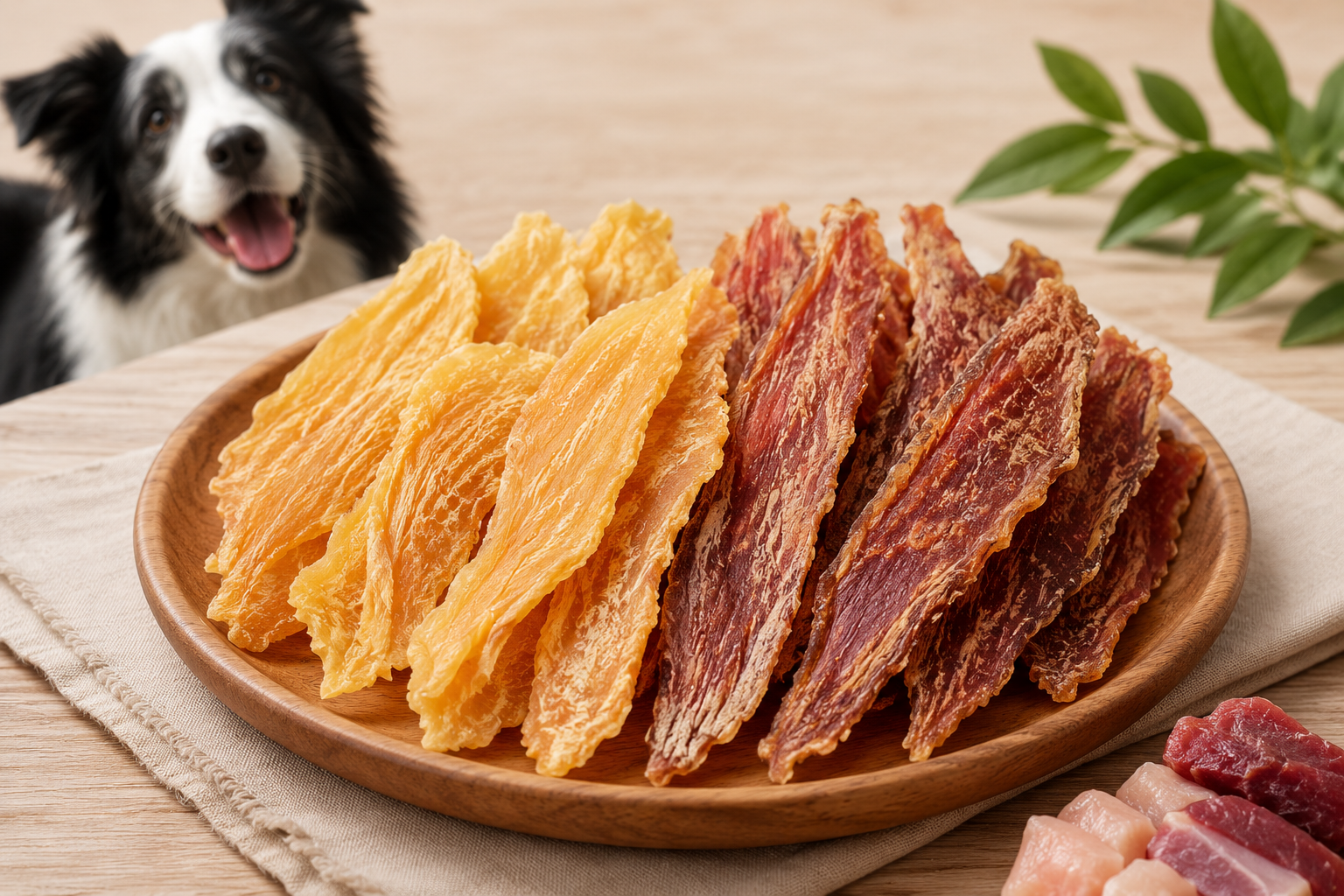
A dog treat can disappear in seconds, yet the ingredients behind it matter for months or even years. That is why many pet owners now pay closer attention to protein sources, calorie content, and processing methods before tossing treats into the cart.
Chicken and duck jerky dog treats continue to grow in popularity because they combine strong flavor, chewy texture, and practical nutrition in one snack.
You probably noticed how some treats leave greasy residue, break apart too easily, or trigger stomach problems after a few servings. Quality jerky treats solve many of those issues when brands use real meat, minimal fillers, and careful dehydration methods.
According to the American Pet Products Association, U.S. pet owners are expected to spend more than $150 billion on pets in 2025, with treats and premium nutrition driving a large part of that growth. That trend shows how seriously people now take canine nutrition.
Chicken and Duck Jerky Dog Treats Deliver High-Protein Rewards Dogs Actually Enjoy
Most dogs respond immediately to rich meat aromas and chewy textures. Chicken and duck jerky treats work especially well during training sessions because the smell keeps your dog focused longer than standard biscuit treats.
Chicken jerky usually contains lean chicken breast or fillet meat. Duck jerky often uses duck breast with fewer ingredients in premium recipes. Many brands now avoid artificial preservatives, corn, wheat, and soy to support cleaner feeding habits.
Common uses include:
- Recall training
- Agility practice
- Daily rewards
- Mental stimulation
- Long chewing sessions
- Supplemental protein support
Several veterinarians and canine trainers recommend high-protein treats during positive reinforcement programs because stronger scent profiles can improve engagement during training exercises.
Dogs with selective appetites often prefer duck jerky because the flavor is richer and more savory than chicken alone.
Why Limited Ingredient Dog Treats Matter for Sensitive Stomachs
Food sensitivity complaints continue to rise among pet owners. Chicken remains one of the most common proteins in dog food, which means some dogs eventually develop irritation or intolerance from repeated exposure.
Limited ingredient dog treats help reduce unnecessary additives and simplify digestion. Premium duck jerky products often contain:
| Ingredient Type | Purpose |
| Duck breast | Primary protein source |
| Vegetable glycerin | Texture retention |
| Mixed tocopherols | Natural preservation |
| Rosemary extract | Flavor preservation |
Many owners report fewer digestive issues after switching to simpler formulas with one primary animal protein.
A small feeding trial with your own dog works better than relying purely on marketing claims. Some dogs thrive on chicken jerky daily, while others digest duck formulas more comfortably.
Best High Protein Dog Treats for Training Sessions
Training treats need to accomplish three things:
- Hold your dog’s attention
- Stay easy to chew quickly
- Avoid excessive calories
Jerky treats often outperform crunchy biscuits because dogs can smell them from farther away. That stronger scent increases motivation during obedience work.
Protein levels typically range between 25% and 70%, depending on processing intensity. Freeze-dried products usually maintain higher nutrient concentration compared to heavily processed treats.
Professional trainers frequently break jerky strips into smaller portions to manage calorie intake during longer sessions.
Here is a quick comparison:
| Treat Type | Protein Level | Texture | Best Use |
| Chicken jerky | Moderate to high | Softer | Daily rewards |
| Duck jerky | High | Rich and chewy | High-value training |
| Freeze-dried jerky | Very high | Crispy-light | Athletic dogs |
If your dog loses interest quickly during training, duck jerky usually performs better because of the stronger aroma.
Grain-Free Dog Treats Continue Gaining Attention
Grain-free dog treats became more popular as owners searched for cleaner ingredient lists and fewer digestive triggers.
Most premium chicken and duck jerky products now avoid:
- Corn
- Wheat
- Soy
- Artificial dyes
- Artificial sweeteners
That said, grain-free does not automatically mean healthier. Ingredient quality still matters more than front-label marketing.
Veterinary nutritionists often suggest focusing on:
- Clearly labeled meat sources
- Minimal preservatives
- Transparent manufacturing
- Calorie awareness
- Safe sourcing practices
Some budget brands advertise grain-free formulas while still using lower-quality meat by-products or excessive sugar.
Freeze-Dried vs Dehydrated Jerky Treats
Processing methods change texture, nutrient retention, shelf life, and price.
Freeze-Dried Jerky
Freeze-dried jerky removes moisture while preserving more natural nutrients and aroma compounds. These products often cost more because the process requires specialized equipment.
Typical pricing ranges from $25 to $60 depending on bag size and protein source.
Benefits include:
- Lightweight texture
- Strong aroma
- Better nutrient retention
- Longer shelf stability
Dehydrated Jerky
Traditional dehydration slowly removes moisture using controlled heat. This method creates the chewy texture most dogs recognize immediately.
Benefits include:
- Lower cost
- Longer chewing time
- Strong meat flavor
- Wide product availability
Most mainstream jerky products sold in stores use dehydration rather than freeze-drying.
Real Product Pricing and Market Comparison
Pricing varies heavily based on sourcing, packaging size, and processing methods.
Here is a practical market breakdown using current U.S. pricing ranges found on official brand websites and retailer listings:
| Product Category | Average Price |
| Small 4oz–8oz bags | $8–$18 |
| Medium 10oz–16oz bags | $15–$35 |
| Large bulk packs | $35–$80 |
| Freeze-dried premium jerky | $25–$60 |
| Veterinary specialty formulas | $40–$120 |
Popular brands competing in this category include:
- Blue Buffalo
- Full Moon
- Merrick
- Waggin’ Train
- Vital Essentials
- Rocco & Roxie
- Nudges
- Pur Luv
After reviewing multiple brands side by side, premium products consistently showed better ingredient transparency and more consistent strip texture.
Lower-cost products occasionally contained uneven cuts, greasy surfaces, or stronger processed odors.
Soft Jerky vs Firm Jerky for Different Dog Sizes
Texture matters more than many owners expect.
Soft Jerky
Soft strips work best for:
- Puppies
- Senior dogs
- Small breeds
- Fast training rewards
They tear apart easily and reduce chewing strain.
Firm Jerky
Firm strips suit:
- Medium breed
- Large breeds
- Aggressive chewers
- Extended chew sessions
Thicker jerky keeps larger dogs occupied longer and creates more chewing satisfaction.
Supervision still matters with both textures because some dogs swallow oversized pieces too quickly.
Potential Concerns You Should Watch Closely
Even high-quality jerky treats can create problems if portions become excessive.
Common concerns include:
| Potential Issue | What To Monitor |
| Digestive upset | Loose stool or vomiting |
| Weight gain | Excess calorie intake |
| Allergic reactions | Itching or skin irritation |
| Choking hazards | Aggressive swallowing |
| Strong odor | Storage complaints |
Several owners also mention that duck jerky leaves more noticeable scent residue on hands and treat pouches compared to chicken.
That stronger aroma improves training motivation, though some people dislike the smell indoors.
First-Hand Feeding Insights From Active Dog Owners
Owners of working breeds and active dogs often report stronger training focus after switching from biscuits to jerky rewards.
One agility trainer noted that duck jerky maintained attention during longer outdoor sessions where standard treats lost effectiveness quickly in distracting environments.
Small breed owners frequently preferred softer chicken strips because they broke apart cleanly without crumbling.
Senior dog owners also reported easier chewing with softer dehydrated formulations.
On the other hand, some aggressive chewers finished thin jerky strips too quickly, which reduced long-term chewing satisfaction.
These mixed experiences show why texture, size, and protein type should match your individual dog’s behavior rather than online hype alone.
Chicken Jerky vs Duck Jerky: Which Option Fits Better?
Both proteins offer strong advantages.
Chicken Jerky Advantages
- Leaner protein profile
- Lower fat content
- Better for calorie management
- Usually lower cost
- Easier daily feeding
Duck Jerky Advantages
- Richer flavor
- Higher palatability
- Alternative protein source
- Better for selective eaters
- Stronger training motivation
Many owners keep both options available and rotate them throughout the week to prevent boredom.
That rotation approach can also help maintain stronger reward value during training.
Final Thoughts
Chicken and duck jerky dog treats continue earning attention because they combine practical nutrition with strong flavor appeal. Dogs enjoy the chewy texture, and owners appreciate the convenience, portability, and protein content.
The best results usually come from choosing treats with clearly labeled ingredients, real meat as the first ingredient, and minimal additives. Texture should also match your dog’s age, jaw strength, and chewing habits.
Duck jerky often stands out for picky eaters, while chicken jerky remains a dependable everyday option for calorie-conscious feeding.
Before buying in bulk, test smaller bags first and monitor digestion closely during the first few days. That small step helps prevent wasted money and stomach issues later.
If you want affordable accessories, treat containers, or budget-friendly pet supplies alongside premium treats, many owners also browse Temu for storage jars, travel treat pouches, and feeding accessories that pair well with jerky products.
Take a closer look at ingredient labels, compare protein sources carefully, and choose treats that genuinely support your dog’s health and daily routine.
Leave a Reply