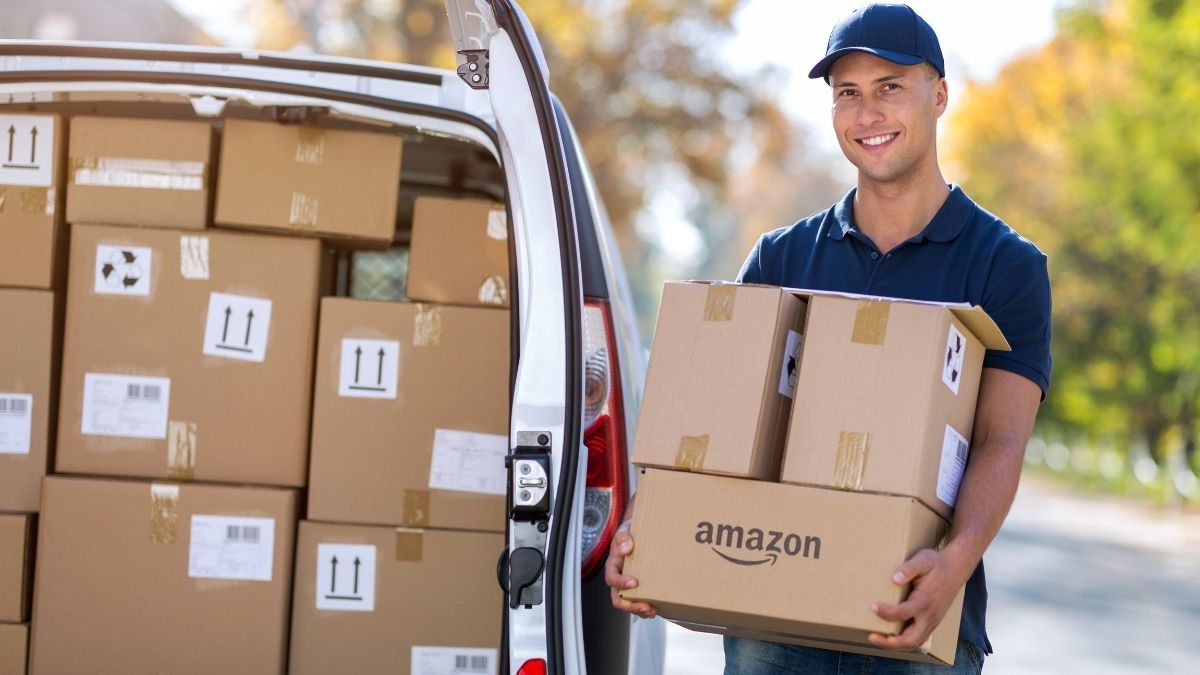
If you’ve ever needed a charger, a last-minute gift, or a pantry refill right now, Amazon Same-Day Delivery is built for you.
In 2025, the service is available across more than 140 U.S. metro areas, and Amazon is pushing deeper into smaller towns. Still, “same-day” only happens when your address, your cart, and your timing all line up.
Here’s a clear guide so you can use it without guessing.
How same-day delivery works behind the scenes
Amazon can deliver in hours because it stores popular items close to where people live.
High-demand products are pre-stocked in nearby fulfillment centers and smaller same-day hubs. When you shop, Amazon checks your ZIP code against that local inventory and only shows same-day options if the item is already within rapid reach.
Your job is simple: look for the “Same-Day Delivery” badge and place the order before the cutoff.
Cutoff times vary by city and sometimes by category. Most areas set a deadline in the early-to-mid afternoon. If you miss it, your order automatically shifts to next-day delivery.
What you’ll pay: Prime vs. non-Prime
Same-day delivery isn’t priced the same for everyone. Prime usually gives you the best value, but there are thresholds.
| Customer type | Typical same-day price in 2025 | Key condition |
| Prime member | Free on eligible orders $25+ | Must be in an eligible area |
| Prime member (small cart) | Small-order fee, often around $2.99 | Applies under $25 |
| Non-Prime customer | Expedited fee, commonly about $9.99–$12.99 | Fee varies by area and category |
Prime membership is still $139 per year in 2025.
Multiple perspectives on value:
- If you order often, same-day perks can help Prime pay for itself quickly.
- If you order only a few times a year, paying non-Prime same-day fees now and then might cost less overall.
- Some shoppers prefer slower, consolidated shipping to reduce packaging or curb impulse buying. That trade-off makes sense if you rarely need items today.
Where same-day is available now
Same-day delivery currently covers over 140 metro areas, including most major population centers and surrounding suburbs.
The bigger shift in 2025 is expansion outside big cities. Amazon says it plans to bring faster delivery to more than 4,000 smaller U.S. cities, towns, and rural communities by the end of the year. That means you may see same-day show up even if your area didn’t qualify before.
Grocery same-day is also growing. Prime members can now get perishables delivered same-day in more than 1,000 towns and cities, with a target of about 2,300 locations by year-end.
If you’re unsure about your address, Amazon confirms eligibility automatically at checkout.
What usually qualifies (and what doesn’t)
Millions of items qualify, but your local selection depends on what nearby hubs stock. You’ll usually find strong same-day coverage in:
- household essentials and cleaning items
- beauty and personal care
- books, toys, and small electronics
- everyday grocery and snack items in supported areas
Common limitations you should expect:
- Oversized or heavy items are often excluded.
- Hazardous or regulated products don’t qualify because of shipping rules.
- Mixed carts (same-day + standard items) can remove the same-day option for everything. Splitting orders helps.
How to improve your odds of getting it today
If you want same-day delivery to work reliably, use this checklist:
- Confirm your address is eligible before you start shopping.
- Only add badge-marked items to your same-day cart.
- Order early, ideally in the morning, to stay ahead of local cutoffs.
- Keep your cart at $25+ if you’re Prime and want free same-day.
- Separate standard-shipping items into another order.
These steps remove most of the friction that turns “today” into “tomorrow.”
Limitations and concerns worth knowing
Same-day delivery is impressive, but it’s not perfect.
- Inventory shifts fast. An item can be eligible in the morning and lose eligibility a few hours later if local stock sells out.
- Speed can encourage impulse purchases. If you’re trying to shop more intentionally, slower delivery can act like a helpful pause.
- Sustainability and labor impacts are debated. Amazon is investing in electric vehicles and better routing, but critics still question the footprint and human cost of ultra-fast logistics.
Amazon is also piloting even faster delivery programs in a few cities, which suggests speed expectations will keep rising. That’s good news for convenience, but it may also widen the gap between what’s possible in dense areas versus remote ones.
Leave a Reply