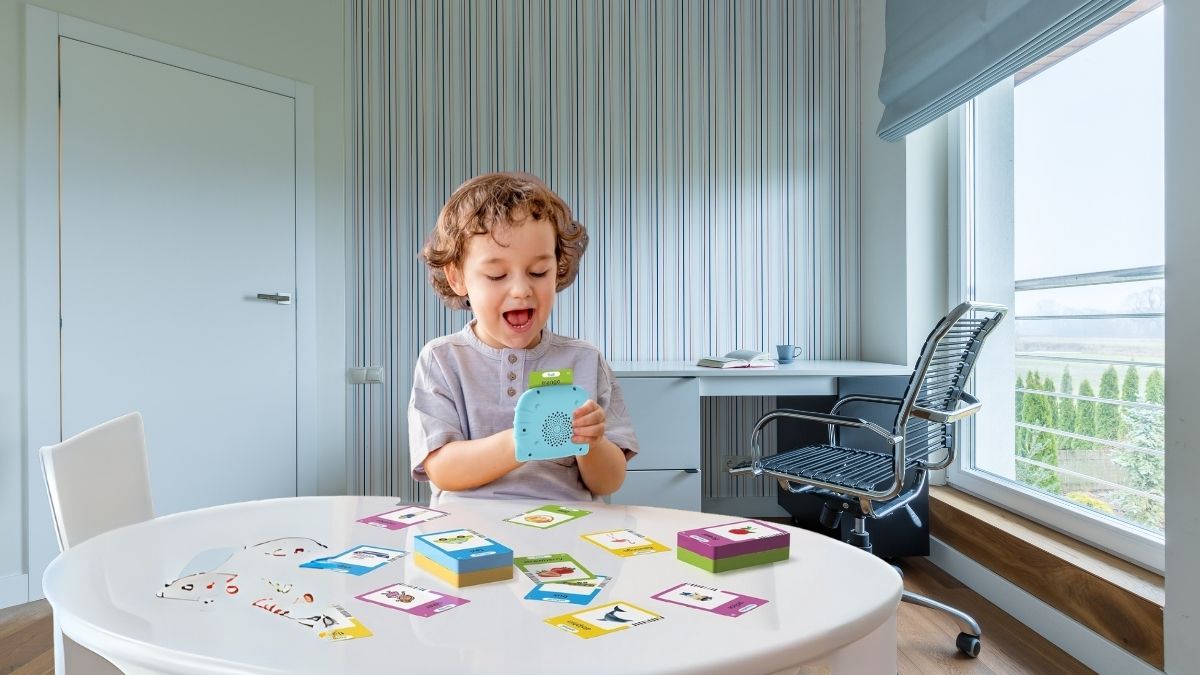
Parents know that moment when their toddler points at something and struggles to find the right word. Watching a child’s face light up when a flash card “speaks” the word they’re trying to say is pure magic.
Talking flash cards bridge the gap between curiosity and language, giving children a multi-sensory way to connect with new words.
With 90% of brain development happening before age five, these tools have become essential in early education. Today’s talking flash cards don’t just show images—they add sound, interaction, and independence to the learning process.
What Are Talking Flash Cards?
Talking flash cards are interactive learning devices that combine traditional visuals with audio pronunciation. A card reader recognizes each card and speaks the word aloud, giving toddlers instant feedback as they explore.
How Flash Cards Evolved
- Traditional flash cards: focused only on images and parent-led pronunciation
- Talking flash cards: add audio recognition for multi-sensory learning
- Result: a tool that matches modern teaching needs without screens
Why They’re Different
Talking flash cards stand out because they focus on education first. They reinforce vocabulary and speech without turning into simple entertainment. By combining visual, tactile, and auditory input, they help toddlers retain words faster and more confidently.
Key Benefits of Talking Flash Cards
These cards support toddler development in several ways:
- Accelerated vocabulary growth through sight, sound, and touch
- Independent learning as toddlers use the card reader themselves
- Speech development from consistent, clear pronunciation models
- Confidence building with instant feedback on words
- Screen-free learning in a tech-driven world
- Support for special needs like autism or speech delays
- Auditory processing skills that prepare for reading
- Parent-child bonding when used in guided sessions
Features to Look For in Quality Sets
When shopping, prioritize these elements:
- Broad vocabulary across everyday categories
- Clear, native-speaker pronunciation
- Durable card design with rounded edges
- Rechargeable battery and auto-off features
- Adjustable volume for different settings
- Cards sized for toddler hands
- Montessori or curriculum-inspired design
- Added features like sound effects or simple games
- Storage options to keep sets organized
Spotlight: Premium 224-Word Talking Flash Card Set
One standout option is a 224-word set offering wide vocabulary, realistic sound effects, and Montessori-inspired design.
The cards are child-sized, the audio is crisp, and the reader includes volume controls plus a rechargeable battery. Lightweight and portable, this set even supports speech therapy and special needs education.
How to Maximize Learning
To get the most from talking flash cards:
- Build short 5–10 minute routines into daily life
- Introduce cards gradually instead of all at once
- Turn sessions into games like “Find the Card” or “What’s Missing?”
- Connect cards to real-world objects during daily activities
- Track progress with a chart to celebrate milestones
- Mix up activities to maintain interest
- Involve siblings or friends for social learning
Age-Appropriate Use
- 12–18 months: short exposure with simple objects
- 18–36 months: peak engagement, strong vocabulary growth
- 3–6 years: expand to actions, emotions, and storytelling games
Comparing Learning Tools
- Traditional flash cards: rely only on visuals
- Talking flash cards: add audio and independence
- Apps: offer tech features but increase screen time
- Books: complement cards by deepening comprehension
Together, these tools create a complete learning environment.
Smart Shopping Guide
Before purchasing, consider:
- Price range ($30–$60 for quality sets)
- Authentic retailers to avoid counterfeits
- Warranty and customer support availability
- Sustainability practices like recyclable packaging
- Accessories like storage cases or carrying bags
Learning Journey Companion
Language development is one of the most exciting milestones for toddlers, and talking flash cards can play a key role in supporting it. By combining clear audio, engaging visuals, and tactile play, these cards give children the foundation for confident communication.
This 2025 pick for interactive toddler learning is available on Amazon. As part of the Toys & Games category in the Amazon Haul collection, you can explore even more educational and engaging products designed to support early childhood growth.
Leave a Reply