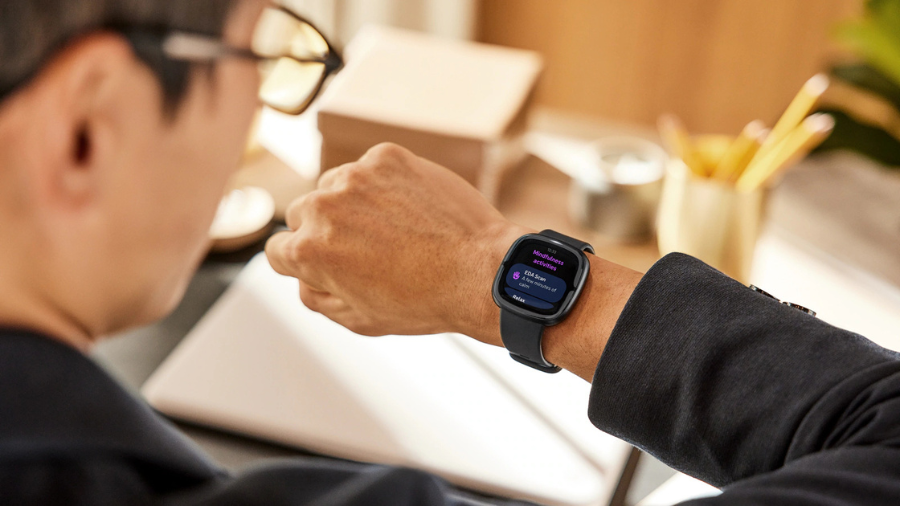
The line between fitness trackers and smartwatches continues to blur, and the Fitbit Sense 2 stands firmly at this intersection. Originally launched in September 2022 at $299.95, this advanced health and fitness smartwatch has maintained its relevance in the wearable tech market. I’ve spent weeks testing this device, and what impressed me most wasn’t just its comprehensive health metrics but how it integrated these features into a device that doesn’t need daily charging. With prices now ranging from $199-$249 depending on sales, is this health-focused wearable still worth considering in 2025? Let’s find out.
Design and Build Quality
The Fitbit Sense 2 strikes an impressive balance between functionality and form factor. At just 40.5 × 40.5 × 12.3 mm and weighing a mere 37-40g, it’s noticeably lighter than most competitors in the smartwatch market. The aluminum case provides durability without adding unnecessary bulk, making it comfortable for extended wear.
The watch features a 1.58″ AMOLED display with 336 × 336 pixel resolution (approximately 299 ppi), delivering crisp visuals that remain readable in various lighting conditions. While the bezel is slightly wider than what you’ll find on premium alternatives like the Apple Watch, it doesn’t significantly detract from the overall aesthetic or functionality.
One standout feature is the 5 ATM water resistance rating, allowing users to wear the Sense 2 while swimming or showering without concern. Fitbit includes both small and large interchangeable silicone bands in the box, ensuring a proper fit regardless of wrist size.
The overall design prioritizes comfort for 24/7 wear—crucial for a device meant to track sleep and continuous health metrics. The lightly domed display with tempered glass provides durability while maintaining a sleek profile.
Battery Performance That Outshines Competitors
Battery life represents one of the Sense 2’s most significant advantages over competitors. With typical usage, you can expect 6+ days between charges—substantially outperforming the daily charging requirement of Apple Watch and Galaxy Watch devices.
Even with GPS activated, the Sense 2 delivers approximately 5 hours of continuous tracking, sufficient for most workout sessions. When the battery eventually runs low, a full recharge takes about 2 hours, while the 12-minute quick charge feature provides roughly a full day of usage—perfect for busy mornings when you realize your watch needs power.
Enabling the always-on display reduces overall battery life by approximately 2 days, presenting a reasonable tradeoff between convenience and longevity. Power-saving settings can extend usage further for those prioritizing battery performance over feature accessibility.
This extended battery life fundamentally changes how users interact with their smartwatch, eliminating the anxiety of frequent charging and enabling more consistent health tracking.
Comprehensive Health Monitoring Capabilities
The Sense 2 shines brightest in its health monitoring arsenal. The ECG (electrocardiogram) function allows on-demand heart rhythm assessments to detect atrial fibrillation, providing medical-grade insights directly from your wrist.
Uniquely, the watch features continuous electrodermal activity (cEDA) monitoring, offering real-time stress detection throughout the day. This sensor measures minute electrical changes in your skin’s sweat level, correlating with stress responses and providing objective data about your emotional state.
Additional sensors include SpO₂ monitoring for blood oxygen levels, skin temperature tracking to identify potential health changes, and heart rate variability (HRV) assessment for overall wellness and recovery insights.
Sleep tracking is particularly comprehensive, providing detailed sleep stages, a Sleep Profile that analyzes long-term patterns, and a daily Sleep Score. The Daily Readiness Score further integrates these metrics to help optimize workout timing based on your body’s recovery status.
Women’s health features include menstrual cycle tracking with symptom logging and predictions, rounding out a holistic approach to wellness monitoring.
Fitness Tracking and Exercise Features
Built-in GPS/GLONASS functionality eliminates the need to carry your phone during outdoor workouts, tracking routes and distances independently. The Sense 2 supports over 40 exercise modes covering everything from running and cycling to yoga and HIIT workouts.
For convenience, automatic exercise detection recognizes six common activities, initiating tracking even when you forget to manually start a workout. During exercises, the watch displays detailed metrics including pace, distance, heart rate zones, and calories burned.
On-screen guided workouts provide visual cues for proper form and timing, though this feature requires a Fitbit Premium subscription. Post-workout analysis delivers training effect assessments and recovery recommendations to optimize your fitness regimen.
The Active Zone Minutes feature gamifies intensity-based exercise, encouraging users to achieve recommended weekly activity goals based on heart rate zones rather than just step counts. This approach aligns better with modern exercise science principles that emphasize intensity over raw movement.
Smart Features and Ecosystem Integration
The Sense 2 bridges the gap between dedicated fitness trackers and full-featured smartwatches. Compatible with both Android and iOS devices via Bluetooth connectivity, it works regardless of your smartphone preference.
Alexa voice assistant integration enables hands-free queries and commands directly from your wrist. Recent updates have added Google Wallet support for contactless payments and Google Maps integration for on-wrist navigation, enhancing everyday utility.
The watch handles notifications for texts, calls, and apps, including quick reply functionality when paired with a smartphone. However, some common smartwatch features are notably absent—there’s no onboard music storage or third-party app support, limiting expandability compared to Apple Watch or Wear OS devices.
Each Sense 2 includes a 6-month Fitbit Premium trial, which unlocks additional features like guided breathing exercises, advanced insights, and on-screen guided workouts. After this period, continued access requires a $9.99 monthly subscription, an important consideration when evaluating total ownership cost.
Performance and Accuracy Assessment
The Sense 2’s heart rate monitoring performs reliably for steady-state activities but occasionally lags during high-intensity interval training. This limitation is common among wrist-based heart rate sensors but worth noting for those focused on precise heart rate zone training.
GPS accuracy compares favorably with mid-range dedicated sports watches, providing reliable distance and route tracking for most users. The occasional signal drop in challenging environments (dense urban areas or heavy tree coverage) affects all wrist-based GPS devices in this category.
Sleep tracking delivers particularly insightful data, matching more expensive dedicated sleep tracking devices in stage detection and disturbance monitoring. The stress detection feature provides genuinely helpful awareness throughout the day, though individual responses to the alerts vary in usefulness.
ECG readings remain consistent with medical-grade devices for normal heart rhythm scenarios, though any concerning readings should be verified by medical professionals. The user interface occasionally experiences slight lag when navigating menus—noticeable but rarely frustrating.
Step counting tends to be more conservative than some competitors, potentially providing a more accurate picture of actual movement rather than registering false positives from subtle wrist motions.
Value Proposition and Who Should Buy It
At current pricing ($199-$249), the Sense 2 represents excellent value for its comprehensive health features. The watch launched in September 2022 at $299.95 but has seen consistent price reductions since then.
The device appeals most to health-conscious individuals prioritizing wellness metrics over extensive smartwatch capabilities. Its multi-day battery life makes it perfect for those frustrated by the daily charging requirements of more feature-rich alternatives.
The Sense 2 serves casual athletes well but may lack specialized metrics needed by serious competitors. Prospective buyers should consider the ongoing Fitbit Premium subscription cost ($9.99/month after the included 6-month trial) when evaluating total investment, as several advanced features require this subscription.
For users primarily seeking health tracking with basic smart features, the Sense 2 presents a strong alternative to more expensive Apple Watch or Samsung Galaxy watches. However, those wanting extensive smart features or a rich app ecosystem might find the limitations disappointing despite the health advantages.
The Bottom Line: Health Tracking Excellence with Compromises
The Fitbit Sense 2 Advanced Health and Fitness Smartwatch continues to deliver exceptional value in 2025. Its comprehensive health monitoring suite, impressive battery life, and refined design make it a compelling option for health-conscious consumers. While it lacks some premium smartwatch features like music storage and third-party apps, its focus on health metrics and battery efficiency creates a more specialized device that excels at its core purpose.
For those primarily seeking a health companion rather than a smartphone extension, the Sense 2 remains one of the most complete packages available. At its current price point, it offers technology that would have cost significantly more just a few years ago. If you value sleep insights, stress management, and comprehensive health data without daily charging, the Fitbit Sense 2 deserves serious consideration.
Leave a Reply