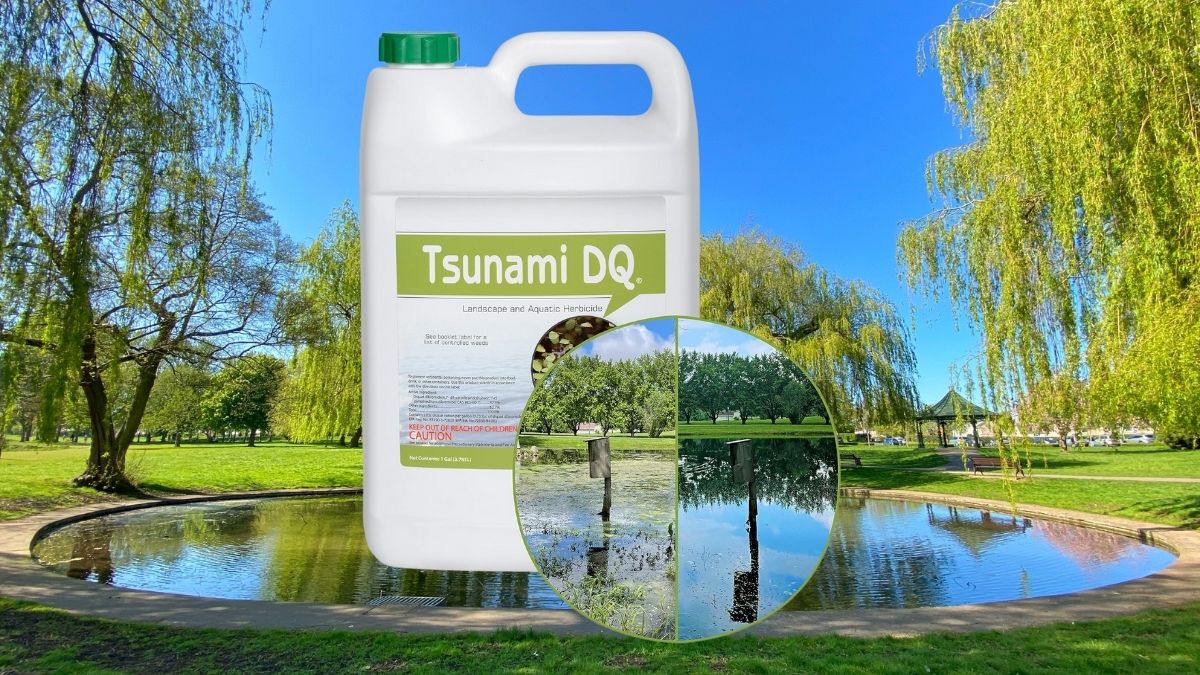
Controlling aquatic weeds can be overwhelming. One season of neglect, and a serene pond can turn into a blanket of green, with duckweed, watermeal, and other nuisances choking out both beauty and biodiversity.
But for property owners and lake managers looking for a fast-acting, reliable solution, Tsunami DQ Aquatic Herbicide has proven itself to be one of the strongest contenders in aquatic weed control.
This article dives into what makes this herbicide so effective, how it works, what to expect after application, and how to use it responsibly.
What Sets Tsunami DQ Apart from the Rest
Before you commit to any aquatic herbicide, it’s worth understanding what differentiates Tsunami DQ from other options.
- High-potency formula: With 37.3% Diquat Dibromide, this contact herbicide outpaces many competitors, which often contain lower concentrations.
- Quick results: Users typically see visible effects like browning or wilting within 24–36 hours of application.
- Wide weed spectrum: Effective against over 15 aquatic weed types—both floating and submerged.
- EPA-registered: Approved for use in aquatic environments (EPA No. 83190-3-72838), with relatively low restrictions.
- Enhanced with surfactants: When used with products like Plex Mate, adhesion and effectiveness are significantly improved.
In other words, it’s a high-impact, broad-spectrum solution designed for fast knockdown in a variety of conditions.
How Diquat Dibromide Works
The science behind Tsunami DQ centers on its active ingredient—Diquat Dibromide—which attacks a plant’s ability to photosynthesize.
- Mode of action: Diquat interrupts photosynthesis, causing plant tissue to quickly dry out and die.
- Fast-acting contact herbicide: Works on direct contact rather than requiring systemic absorption.
- Minimal residual impact: Binds to soil particles and deactivates, making it safer for aquatic ecosystems than some alternatives.
- Ideal conditions: Performs best in water temperatures above 50°F, during active growth phases in spring and summer.
Weeds It Controls Best
Tsunami DQ is a go-to for many lake managers because of its broad-spectrum control:
Floating Weeds
- Duckweed
- Water hyacinth
- Water lettuce
- Frog’s bit
- Pennywort
- Salvinia species
Submersed Weeds
- Hydrilla
- Coontail
- Elodea
- Naiad
- Curly-leaf pondweed
- Bladderwort
Emergent Weeds (Partial Control)
- Cattails
- Shoreline grasses
This non-selective herbicide works where copper-based or biological solutions often fall short—especially in muddy or turbid water.
How to Apply Tsunami DQ (The Right Way)
Correct application is key to seeing those rapid results without harming your pond’s ecosystem.
- Rate: 2 to 8 quarts per surface acre, depending on weed type and severity.
- Timing: Apply on sunny days when weeds are actively photosynthesizing.
- Partial treatments: Only treat half the waterbody at a time to avoid oxygen depletion; wait 14 days between treatments.
- Surfactant use: Boost effectiveness on waxy or floating plants.
- Equipment: Works with sprayers, injection systems, or weighted hoses.
Tips for Best Results
- Apply in the morning to align with high photosynthesis activity.
- Avoid application right before rainfall, which can dilute the product.
- Use split applications for heavily infested areas.
- Always wear protective equipment during use.
What About Water Safety?
Tsunami DQ is generally considered safe for aquatic life when used properly, and recreational use can resume shortly after application.
| Use Type | Waiting Period |
| Swimming and fishing | Immediately after |
| Livestock water | 1 day |
| Human drinking water | 3 days |
| Crop irrigation | 5 days |
Note: It’s not permitted in several states, including California, New York, and Washington, due to regulatory differences.
Tsunami DQ vs. Other Herbicides
Here’s a quick breakdown of how Tsunami DQ compares to other common options:
| Feature | Tsunami DQ | Fluridone | Copper-Based Herbicides |
| Action speed | 1–2 days | Several weeks | 3–10 days |
| Selectivity | Non-selective | Often selective | Often selective |
| Weed types | Floating & submersed | Mostly submersed | Floating algae, limited weeds |
| Cost-effectiveness | High (per treated acre) | Moderate to high | Variable |
| Resistance handling | Works on resistant species | May require combo treatments | Can build resistance |
For lake managers needing immediate results, Tsunami DQ is hard to beat.
What Users Have Experienced
Those who’ve used Tsunami DQ consistently report:
- Visual improvement in 24–48 hours
- Surface weeds gone within 7–14 days
- Significant reduction in weed biomass for the season
- Usability restored for recreation or aesthetics
It also works well in less-than-ideal conditions, like murky water or weedy shallows.
Smarter Long-Term Weed Control Strategy
Tsunami DQ is highly effective—but no herbicide is a silver bullet forever. Here’s how to extend your results:
- Identify weeds correctly before treatment.
- Reduce nutrient input (fertilizers, runoff) to prevent regrowth.
- Combine methods—chemical, mechanical, and biological—for better control.
- Track results through photos and treatment logs.
- Aerate the pond to boost water health and limit weed growth.
Buying and Storing Tsunami DQ
You can find Tsunami DQ through authorized dealers or online retailers, including Amazon. Look for:
- EPA Reg. No.: 83190-3-72838
- UPC: 768980001393
Storage Guidelines
- Keep in original container
- Store between 40–100°F
- Avoid direct sunlight and heat
- Shelf life: ~2 years when stored properly
Triple-rinse empty containers and dispose of them according to local environmental guidelines.
Why Tsunami DQ Is Worth Considering
If you’re looking for a rapid, broad-spectrum aquatic weed control option that’s simple to apply and cost-effective per acre, Tsunami DQ deserves a spot on your shortlist.
It’s a smart solution for ponds and lakes plagued by aggressive, resistant weeds. With proper application and responsible use, it can quickly turn back the tide of weed infestations—restoring your waterway’s health and usability in just days.
Leave a Reply